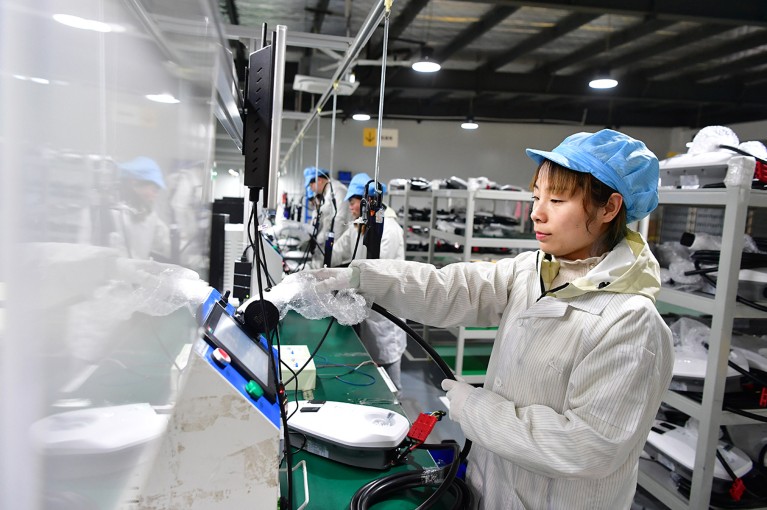
How ‘Made in China 2025’ Helped Supercharge Scientific Development in China’s Cities

The "Made in China 2025" (MIC2025) initiative, launched in 2015, has significantly transformed China's industrial landscape, particularly in cities like Hefei, which is rapidly emerging as a hub of innovation. This policy aims to shift China from being the "world's factory" for low-value products to a leader in high-tech manufacturing across various sectors, including information technology, aerospace, and renewable energy.
Hefei has become a prime example of the success of MIC2025, doubling its economic output to approximately US$140 billion in just a decade. The city has replaced extensive farmland with technology parks and scientific facilities, moving towards in-house production of high-tech components rather than relying on imports. This shift has positioned Hefei as the electric vehicle (EV) capital of China, with significant government support for startups and collaborations with local universities, particularly the University of Science and Technology of China.
The overarching goal of MIC2025 is to achieve 70% self-sufficiency in key industries. While official progress reports are limited, there are indications that many targets have been met, especially in renewable energy and biopharmaceuticals. For instance, China now accounts for 80% of the world's solar cell exports and has established itself as a leader in new energy vehicle production, aiming for over 80% of the domestic market to be filled with locally produced EVs by next year.
The biopharmaceutical sector has also seen substantial growth, with cities like Shanghai emerging as key players. Shanghai hosts over 3,000 life-science companies and has invested heavily in research and development, making it a magnet for both local and international talent. The city’s government has introduced significant subsidies and incentives to accelerate clinical research and biopharmaceutical innovation.
Despite these successes, challenges remain. The focus on self-reliance has led to tensions with other countries, particularly the United States, which has responded with tariffs and restrictions, notably in the semiconductor sector. This has raised concerns about China's ability to meet its MIC2025 targets in areas where it is still developing capabilities, such as high-precision machinery and advanced materials.
Moreover, there are worries that the government's prioritization of certain sectors may stifle creativity and innovation among researchers. The top-down approach of MIC2025 could lead to a misalignment between government goals and the interests of individual researchers, potentially hindering broader scientific advancements.
The semiconductor industry exemplifies the complexities of China's technological ambitions. Despite efforts to bolster domestic capabilities, China still faces significant challenges, including a talent gap and reliance on imported technologies. While universities are stepping up to develop semiconductor expertise, it may take years to cultivate a robust local market.
As MIC2025 approaches its conclusion, China is looking ahead to its 15th Five-Year Plan, set to be implemented in 2026. This plan is expected to continue the momentum towards high-tech goals, with a focus on enhancing China's position in global supply chains and promoting industrial upgrading. Experts anticipate that China will maintain its strengths in new energy vehicles, renewable energy, and biopharmaceuticals while increasing investments in semiconductors and high-precision machinery.
The "Made in China 2025" initiative has undeniably spurred significant advancements in scientific development and technological innovation across Chinese cities, particularly Hefei. However, as the country navigates the challenges of global competition and internal innovation dynamics, finding a balance between government priorities and fostering an environment conducive to creativity will be crucial for sustaining its growth trajectory. The future of China's high-tech ambitions will depend on its ability to adapt and innovate in an increasingly complex global landscape.