How Creative Poetry Book Layouts Can Elevate Your Verse
-
 Loading...
 - Toure Ibrahim
- 06 Mar 2023
- 75 Views
- 0 Like
- 0 Comment
Poetry books pose a unique design challenge: to present a collection of poems in a visually interesting way that embodies their tone, mood, and atmosphere without distracting from the content of the work.
The Reedsy marketplace has some of the most experienced poetry book layout designers in the industry — and we’ve gathered a few of their designs and insights to inspire and educate anyone seeking inspiration for their poetry book layouts.
Every design element reinforces the poetry’s intent
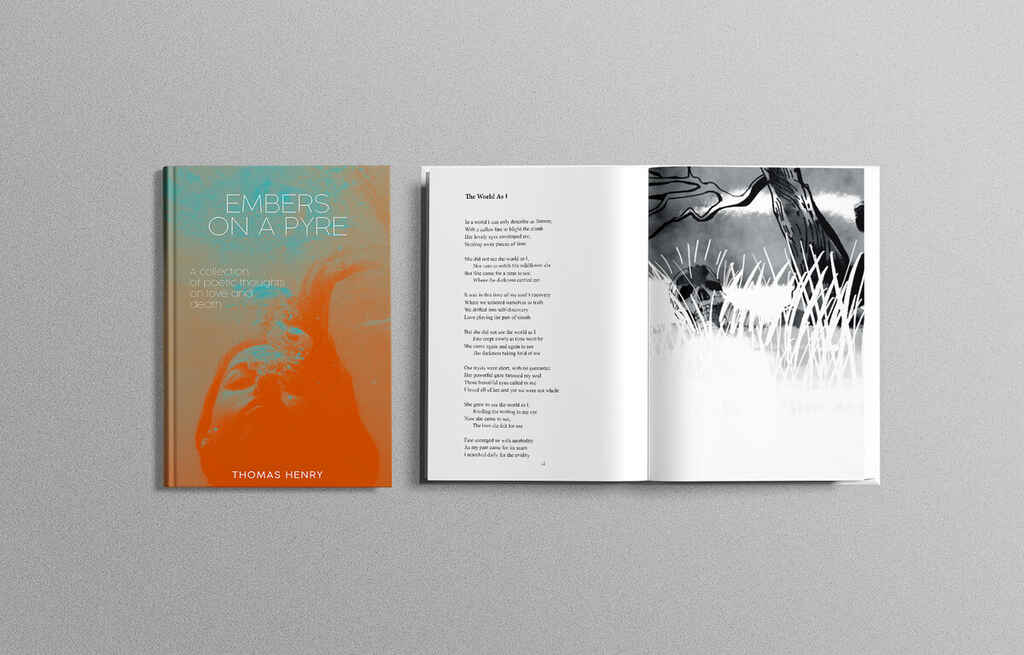
A successful poetry book's layout involves a simple and effective title page, introduction, and table of contents, images and illustrations arranged around poems, solutions to page breaks (when poems must be divided into multiple pages), a typeface that suits the spirit of the work, and visual playfulness if appropriate.
Typesetting poetry is often a collaborative process where the poet leads the designer toward a common artistic vision. It begins with establishing facts — Sebastián Cudicio, a Reedsy designer and illustrator with over 20 years of experience in the industry, always starts by asking the poet about three fundamental issues:
- whether the collection consists of text only
- whether it requires a specific graphic solution or treatment, and
- whether the book will include illustrations or images.
From there on, the layout designer is tasked with considering the mood and subject matter of the poems, ensuring that their visual choices are guided by these, or at the very least aligned in attitude.
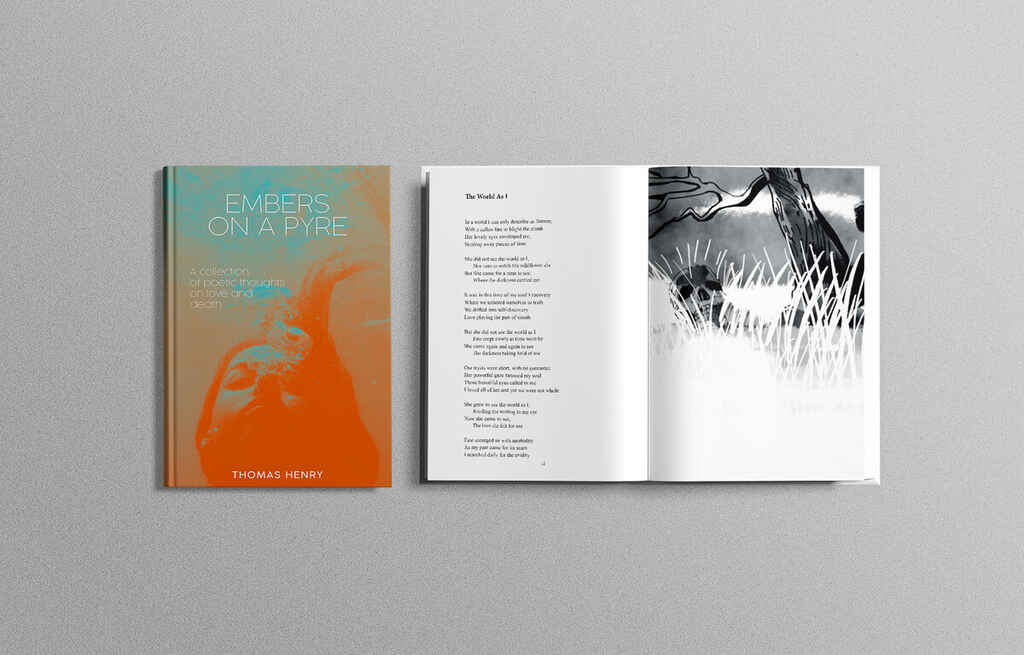
In the example above, taken from a poetry collection that deals with dark thoughts during times of struggle, Sebastián's layout is simple and serious, in line with the themes of the work.
The right layout design will only take liberties afforded to it by the text. "There is a potential for expanded creativity when designing the interior of a poetry book," says David Provolo, one of Reedsy’s most in-demand book designers. "But ultimately, the aesthetic and composition are directed by the nature of the poems (alignment, line lengths, and meter) and the poet’s vision."
In other words, the design can be a graphic re-interpretation of the poetry collection, a reflection of its essence through a different artistic medium. Read More…