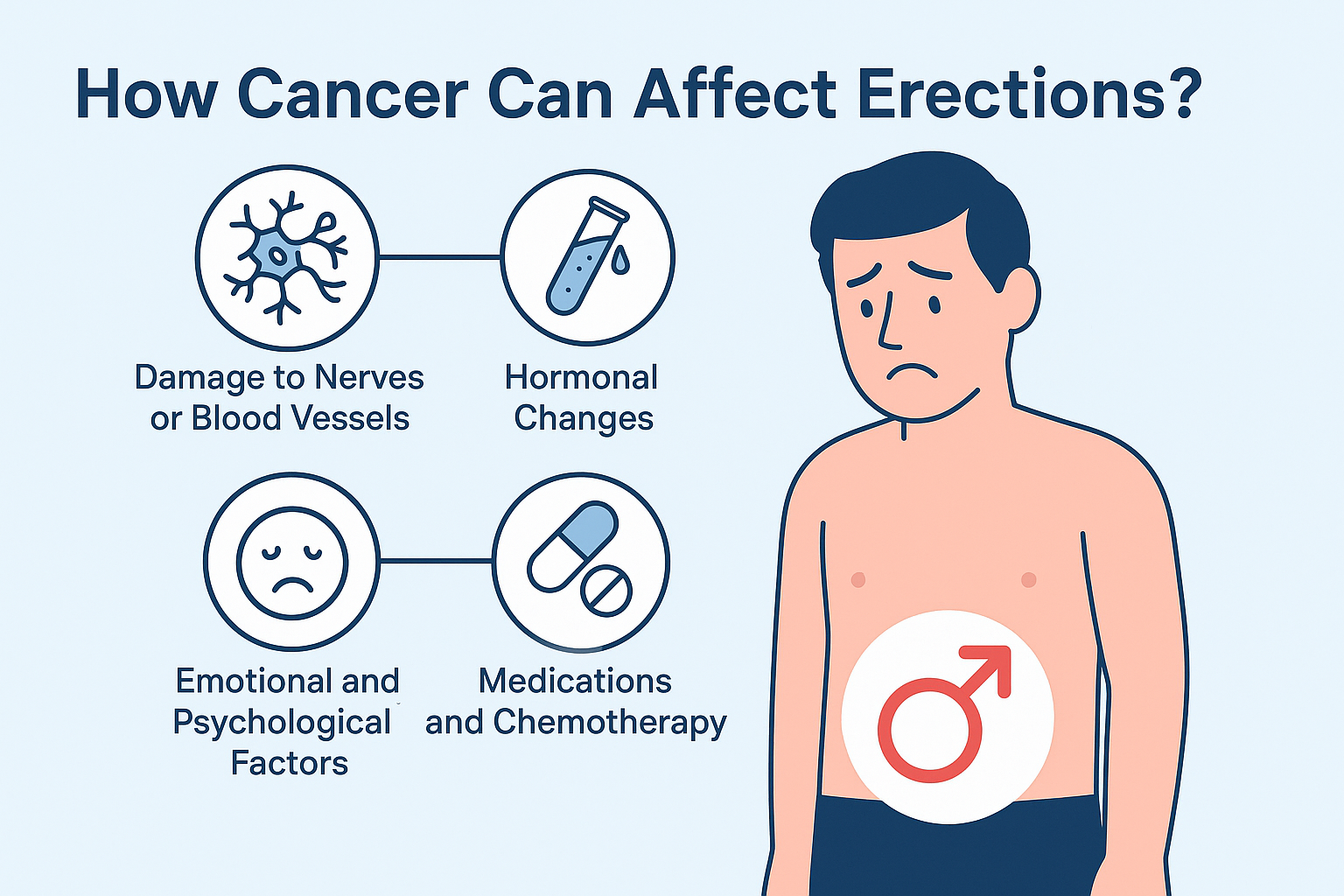
How Cancer Can Affect Erections?
-
 Loading...
 - johnlevish
- 17 Apr 2025
- 47 Views
- 0 Like
- 0 Comment
Cancer is a life-changing diagnosis that affects not only physical health but also emotional well-being and intimate relationships. One of the lesser-discussed yet significant side effects of cancer and its treatments is erectile dysfunction (ED). Many men find it difficult to talk about this issue, but it's important to understand that ED is a common complication, especially in those undergoing treatment for cancers related to the pelvic region.
This blog aims to explain how cancer can affect erections, the underlying causes, and potential solutions like Hiforce 100 ODS and Tastylia 80 mg to help regain sexual confidence and intimacy.
What Is Erectile Dysfunction?
Erectile dysfunction is the inability to achieve or maintain an erection firm enough for sexual activity. While it becomes more common with age, it can affect men at any point in life—especially when other health issues, such as cancer, come into play.
How Cancer Can Lead to ED
There are several ways cancer can impact a man’s ability to have or maintain an erection:
1. Damage to Nerves or Blood Vessels
Cancers in the pelvic area—such as prostate, bladder, colorectal, or testicular cancer—often require surgery or radiation therapy. These treatments can inadvertently damage the nerves and blood vessels responsible for erections. For example:
Prostatectomy (surgical removal of the prostate) can damage the cavernous nerves.
Radiation therapy can affect both the blood vessels and tissues that support erectile function.
2. Hormonal Changes
Some cancer treatments, especially for prostate cancer, involve hormone therapy (androgen deprivation therapy). These treatments lower testosterone levels, which can decrease libido and make it difficult to achieve erections.
3. Emotional and Psychological Factors
A cancer diagnosis is emotionally taxing. Stress, anxiety, depression, and low self-esteem can contribute to erectile dysfunction. The fear of sexual failure or concern over body image (e.g., after surgery) can also have a negative impact.
4. Medications and Chemotherapy
Certain chemotherapy drugs and pain medications can interfere with the nervous system or hormone levels, leading to temporary or even long-term ED.
Treatments for Cancer-Related Erectile Dysfunction
Fortunately, there are ways to manage ED after cancer treatment. Some of the commonly used oral medications include Hiforce 100 ODS and Tastylia 80 mg, both of which are designed to improve blood flow to the penis and help achieve erections.
Hiforce 100 ODS
Hiforce 100 ODS is an orally disintegrating strip that contains sildenafil citrate, the same active ingredient found in Viagra. It helps relax the blood vessels and improve blood flow to the penis during sexual stimulation. The ODS format makes it quick to absorb and easy to take without water.
Benefits: Rapid onset, user-friendly format, effective for many men with mild to moderate ED.
Usage: Take about 30 minutes before sexual activity. Avoid heavy meals and alcohol for best results.
Precaution: Not recommended for those taking nitrates or with heart conditions. Always consult your doctor.
Tastylia 80 mg
Tastylia 80 mg contains tadalafil, the active ingredient in Cialis. It works similarly to sildenafil but lasts longer—up to 36 hours. This makes it a great option for men who prefer more spontaneity in their sexual activities.
Benefits: Long-lasting effect, once-a-day use available, suitable for chronic ED.
Usage: Take 30–60 minutes before activity. It can be taken with or without food.
Precaution: Like all ED medications, Tastylia should be used under medical guidance, especially if you have underlying health issues.
Additional Supportive Strategies
Apart from medications, these lifestyle changes and supportive therapies can also help manage cancer-related ED:
Pelvic Floor Exercises: Kegel exercises help strengthen the muscles involved in erections.
Counseling or Sex Therapy: Talking to a therapist can help you and your partner navigate the emotional impact of ED.
Vacuum Erection Devices (VEDs): These are mechanical pumps that help create an erection without the use of medication.
Penile Implants: In severe cases, surgical implants can restore sexual function.
The Importance of Communication
It’s essential to talk openly with your doctor about ED. They can help you understand the cause, rule out other medical issues, and recommend the most effective treatment. Partners should also be part of the conversation—honest communication can reduce pressure and help maintain intimacy during and after cancer treatment.
Conclusion
Erectile dysfunction is a common but often unspoken challenge for men dealing with cancer. Whether it's due to nerve damage, hormonal changes, or emotional stress, it's important to know that you're not alone—and that help is available. Medications like Hiforce 100 ODS and Tastylia 80 mg have helped many men regain sexual function and confidence. Combined with a supportive approach and medical guidance, you can reclaim control over your sexual health and well-being.


