Home to rare corals, a Chilean fjord declines in spite of protection
-
 Loading...
 - Scot Lewis
- 25 Apr 2023
- 76 Views
- 0 Like
- 0 Comment
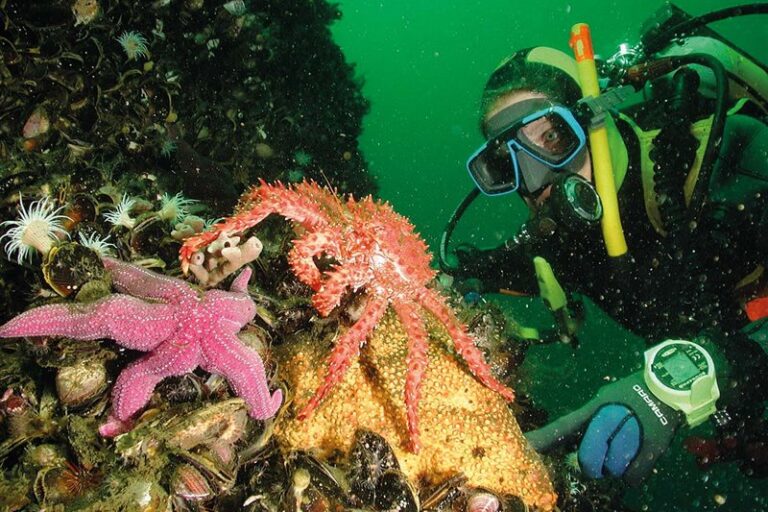
The Comau, Reñihue and Reloncaví fjords, located in southern Chile’s Los Lagos region, are one-of-a-kind natural laboratories that host diverse species of crustaceans, sea anemones, sea cucumbers, polychaetes and corals. These bodies of water are narrow inlets left by glacial erosion that feed the ecosystem of the Patagonian Sea.
Chilean Patagonia is shaped by its southern, central and northern fjords. Despite being related, “they contain species with very different characteristics,” says Vreni Häussermann, a German-Chilean biologist and marine explorer who has studied the Comau Fjord for more than two decades.

The Reñihue and Comau fjords are the only places in the world where large populations of the cold-water coral Desmophyllum dianthus can be found near the water’s surface. The species congregates mostly in the Comau Fjord, where it works as a bioengineer, constructing three-dimensional structures that shelter other species. This is one of the reasons why the Chilean government declared the Comau Fjord a Protected Coastal Marine Area of Multiple Uses (AMCP-MU) in 2003.
Despite its importance, the Comau Fjord is in a state of “serious deterioration” due to the effects of salmon farming and the advance of climate change, says Häussermann, a professor at San Sebastián University in Chile.
Out of an attempt to halt the degradation of the fjord was born the urgent need to “carry out investigations of the species that live in Comau,” Häussermann says, and that is precisely what she and a group of scientists carried out last year.
New information for science
In 1998, Häussermann and Günter Försterra, chief scientist and research coordinator at the San Ignacio del Huinay Foundation and a professor at the Pontifical Catholic University of Valparaíso, the study’s principal researchers, were the first to discover banks of D. dianthus coral in the Reñihue Fjord in northern Patagonia.
They called the species “fjord coral” and later, in 2003, they discovered more banks of the animals while diving in the shallow waters of the Comau.
This isn’t a common finding. The species lives in other parts of the world, but below 6,000 meters (about 20,000 feet) deep. In Chile, however, the coral is found just 5 m (16 ft) below the surface. “Samples can be found just by diving,” says Ignacia Acevedo-Romo, a marine biologist and research assistant in the study. Given the accessibility of the Comau corals, Häussermann was eager to study the species. Read More…