Higher Education in Chile
-
 Loading...
 - Gabriele Romano
- 30 Jun 2022
- 153 Views
- 0 Like
- 0 Comment
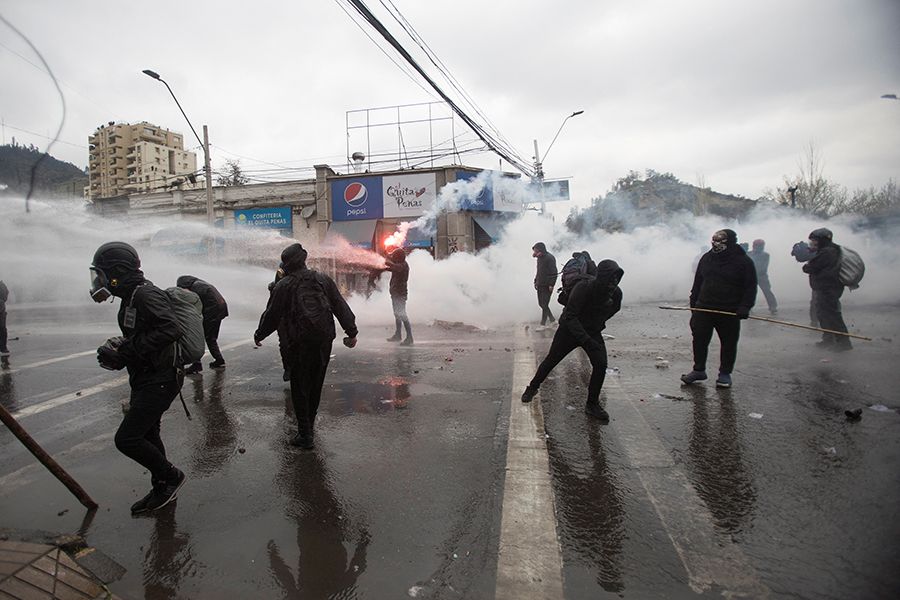
In Chile,universal access to quality higher education has been a challenge for decades, and this shows little sign of abating under President Piñera.While Chileans live far better than most of their Latin American neighbors, student protests reveal a deep unrest over uneven academic opportunity.Specifically, these youths are against the inequities caused by the government-subsidized private education system that has existed for decades; a system which, ironically, was created to alleviate inequality a generation a go.But like many of the specifics to be discussed in this paper, the push for wider access to higher education resulted in its own set of failures, as have many reforms of the initial reforms.
Chile’s focus on market-basedliberalism in education needsretooling.If the Piñeragovernment is tosucceed in achieving more equitable outcomes in education they mustusecommon-sense incentivesand reformsto make investment ineducation affordableand effective.The current voucher-based system dates back to the 1970s, whenthere were only ahandful of universities. They were publiclyfunded andextremely competitive.It was mostly elites that were able to ensure that theirchildren would qualify to gain admission.To solve thebottleneck, the Chilean ministry of education pushed for the creation of more universities.
They believed that competition would result in improved access and affordability for all Chileans.Unfortunately, this reform did not work as intended. Tuition fees have gone up 60% in the last 15 years. (s2,p26) According to the OECD report onhigher education in Chile, a student’s college is stillcontingent on the purchasing power ofhis or herfamily. (s3,p34)Yet financing is possible for those who cannot pay up front. The government backs student loans at an average of5.8%interest. (s1,p4) Thoughexpensive, the loanshave enabled many more students to go to a college,but not necessarily one that provides sufficient return on investment. Debt burdensare so high that 39% of Chileans with bachelor’sdegrees found that their debt overshadowed any long-term economicbenefits from their degrees.(s1,p6) Despite these initiatives, the Chilean government isstill not investing as much as it should.
Public expenditure per student is only $3,500 per year, far less than the OECD average of $8,831. Meanwhile, wealthy Chileans spend money on top of what vouchers provide them for tuition, which creates inequality among private schools as well.(s1,p6). But elite universities are not limited in what they can charge beyond the vouchers. Without tuition caps, poorer students are still priced out.(s3,p37)But most poor students won’t get to that point. The PSU test (Chile’s equivalent of the SAT) was set up less than a decade ago to combat inequality and provide clearer standards for admission in universities across Chile.The test has had the opposite effect. Read More...