Guatemala volcano: Almost 200 missing and 75 dead
-
 Loading...
 - Lieze Van Riel
- 06 Jun 2021
- 1094 Views
- 0 Like
- 0 Comment
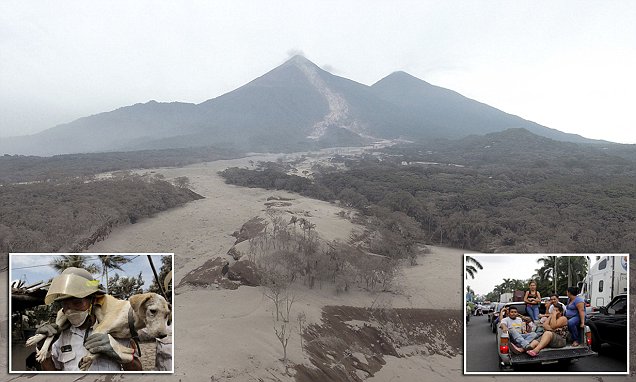
Villages on the slopes were buried in volcanic ash and mud.
Rescue work on Tuesday was disrupted when a new eruption sent hot gas and molten rock streaming down the volcano's south side.
More than 1.7 million people have been affected by Sunday's eruption, with more than 3,000 evacuated.
Tuesday's explosion took many by surprise after volcanologists said the eruption, which had sent ash up to 10km (33,000ft) into the sky on Sunday, was over for the near future.
Eddy Sanchez, the head of Guatemala's National Institute of Seismology, had predicted "no imminent eruption over the next few days".
A village wiped off the map
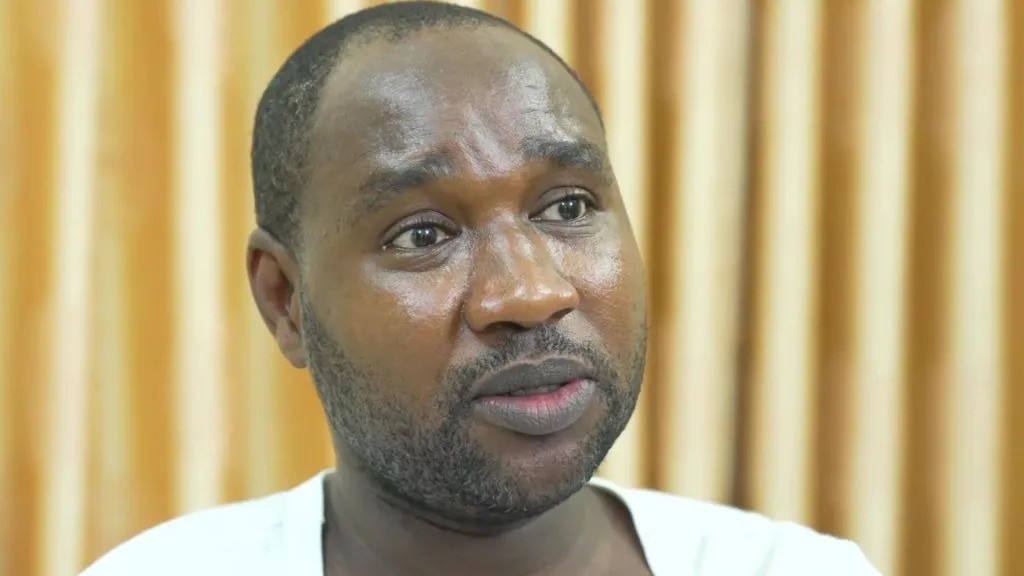
Boris Rodriguez has no-one to turn to now. He lost more loved ones in a single night on Sunday than many do in a lifetime.
Mr Rodriguez's wife, both of her parents, his brother and sister-in-law and their children died when the Fuego volcano erupted.
"I saw the children's bodies," he told me between sobs. "They were huddled together in the bed, like they were trying to hide from what was happening."
If Mr Rodriguez, who is 25, were a solitary case, it would be heartbreaking enough. But most of his neighbours in the village of El Rodeo have similar stories of grief. The village was almost entirely wiped off the map.
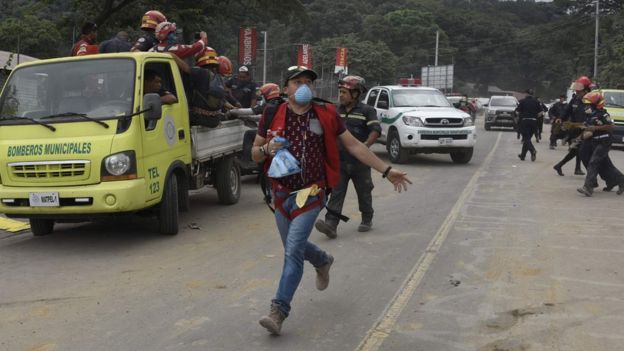
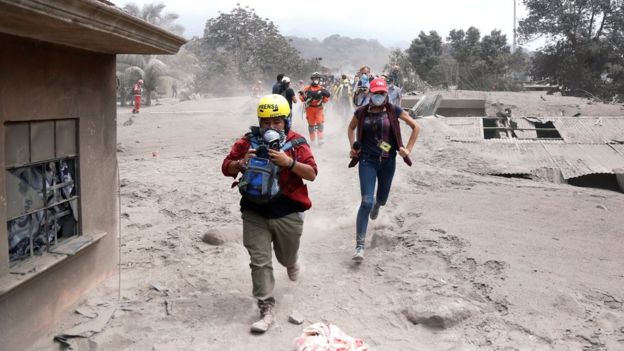
Why were so many people killed in the initial eruption?
Almost 200 people remain unaccounted for, said AFP news agency, quoting Guatemala's Disaster Relief Agency.
No evacuation alert was issued before the volcano erupted on Sunday, said the agency's chief, Sergio Cabañas.
He added that local residents had received training in emergency procedures but were not able to implement them because the initial volcanic activity happened too fast.
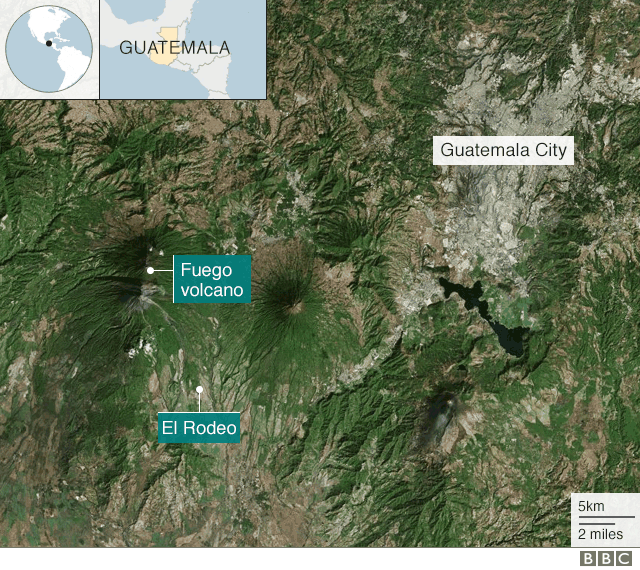
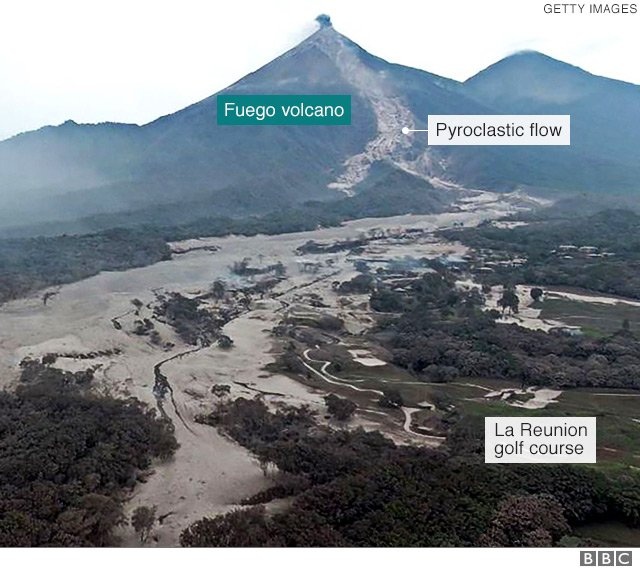
Sunday's blast generated pyroclastic flows - fast-moving mixtures of very hot gas and volcanic matter - which descended down the slopes, engulfing communities including El Rodeo and San Miguel Los Lotes.
Volcanologist Dr Janine Krippner told the BBC that people should not underestimate the risk from pyroclastic flows and volcanic mudflows, known as lahars.
"Fuego is a very active volcano. It has deposited quite a bit of loose volcanic material and it is also in a rain-heavy area, so when heavy rains hit the volcano that is going to be washing the deposits away into these mudflows which carry a lot of debris and rock.