Fuatscha Grassa

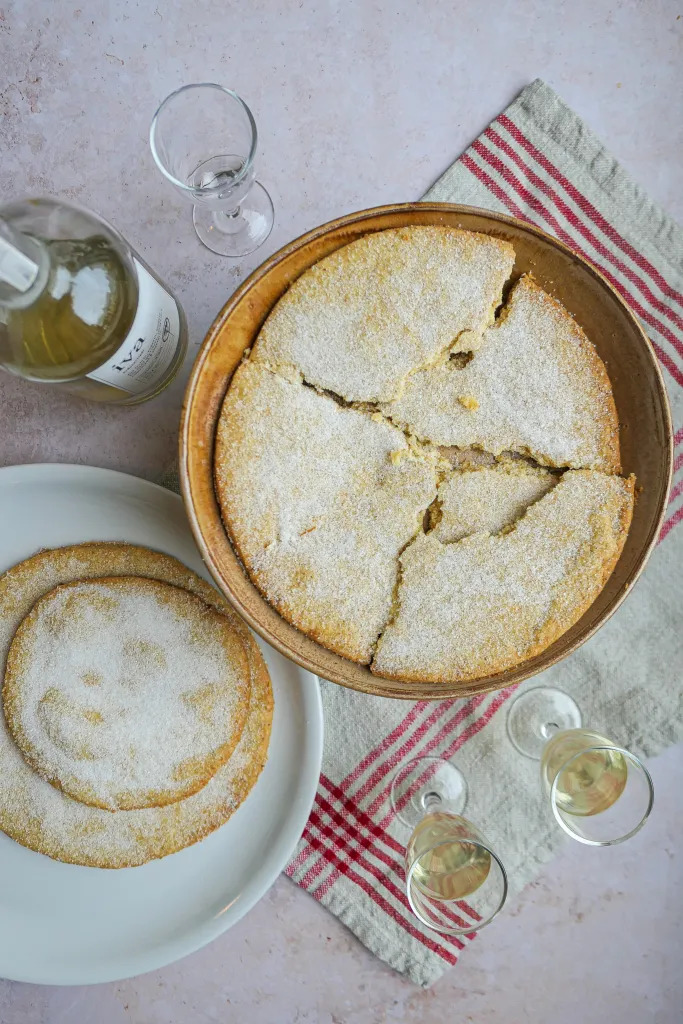
During a summer trip to Scuol, I picked up a Fuatscha Grassa from Peder Benderer bakery. This large, round and flat biscuit has a generous sprinkle of sugar on its surface. Recipes for this biscuit often call for equal amounts of butter and flour. It resembles the pastry used to make another specialty from this region, the nusstorte.
When I got back home, I read more about the history of the Fuatscha Grassa. A cookbook from Chur in the 16th century, Ein schön Kochbuch 1559, indicates this biscuit stretches back centuries in this region. This ancient book contains a recipe for fugascha, as reported by graubündenVIVA. This association also estimates that early bakers must have also used rye flour to make these biscuits, as wheat was not typically grown in this mountainous area.
Today, you can find Fuatscha Grassa at bakeries throughout the year, but they play a special role at the end of December. The tradition from the Engadine is to apply surface pressure to the middle of these biscuits in order to break them into pieces. According to Patrimoine Culinaire Suisse, the number and size of the broken pieces indicate the quantity and the magnitude of the luck one might have in the coming year.
If you want a sweet, delicious method for predicting your future, why not bake a batch of Fuatscha Grassa at home?
How to make Fuatscha Grassa:
Makes 3 large biscuits
Ingredients
Dough:
200 g all-purpose or white flour
50 g whole grain rye flour
1/4 teaspoon salt
250 g unsalted butter, softened
50 g sugar
1 large egg
zest of one organic lemon
Sprinkle on after baking:
1-2 tablespoons sugar
Instructions
- In a medium bowl, whisk together the flours and salt until well combined. Set aside.
- Separately, cream together the butter and sugar in a large bowl. Then, add the egg and mix until it becomes fully incorporated. Stir in the lemon zest. Read More…