Frog Glue and Its Unique Adhesive Properties
-
 Loading...
 - Andreas Lehmann
- 23 Jul 2024
- 61 Views
- 0 Like
- 0 Comment
In a groundbreaking study, researchers from the Vrije Universiteit Brussel, University of Mons, VIB-VUB Center for Structural Biology, and KU Leuven have uncovered the secrets behind one of nature's most intriguing chemical defense mechanisms: frog glue. Their findings, published in Nature Communications, reveal the structural and expression changes in two proteins that have driven the parallel evolution of adhesive secretions in various frog species.
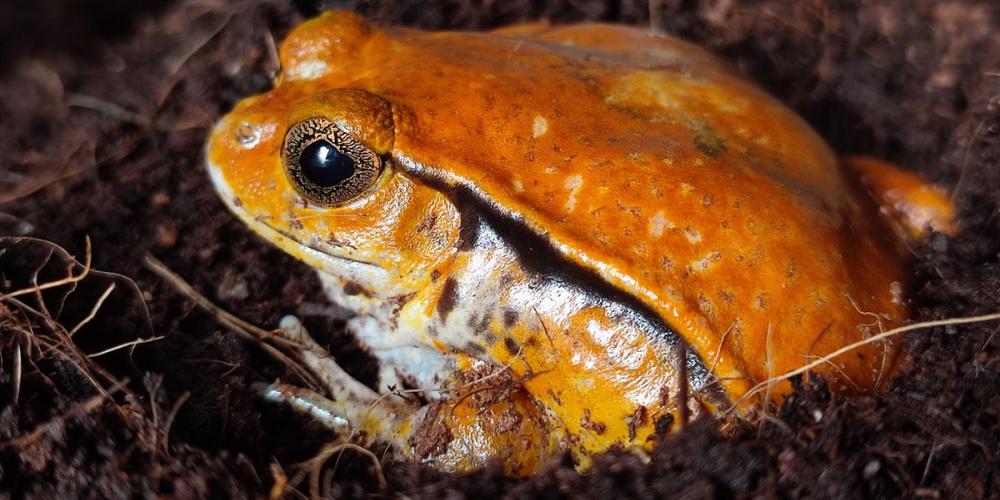
Frogs and toads have played significant roles in cultural folklore, medicinal practices, and shamanistic rituals worldwide, primarily due to the chemicals produced by their poison glands. While most research has focused on amphibian toxins, VUB researcher Shabnam Zalman highlights a lesser-known yet equally fascinating defense strategy: the production of a highly viscous, sticky slime that turns into an adhesive when the frog is attacked by predators.
Zalman and her team observed that certain amphibians secrete a sticky substance from their skin when threatened. This substance quickly becomes a strong adhesive, making it difficult for predators to consume the frog. Unlike the well-studied adhesives of spiders and other invertebrates, frog glues have largely been overlooked both in scientific research and popular culture.
Utilizing a range of technologies from Lego® bricks to high-powered microscopes, the researchers embarked on an in-depth study of frog glue. They identified key protein-protein interactions that give the glue its adhesive and cohesive properties. This pioneering research not only enhances our understanding of vertebrate glue proteins but also holds potential for the development of new, biomimetic adhesives for medical and biotechnological applications. These future adhesives could offer non-toxic and environmentally friendly solutions.
One of the study's most intriguing discoveries is the role of gene expression in the evolution of amphibian glues. While various glue-producing animals have developed unique adhesives independently, the researchers found that different frog lineages have adapted the same pre-existing proteins to create their sticky defenses. This finding underscores the concept of extreme evolutionary determinism, where certain evolutionary outcomes are inevitable given specific genetic and environmental contexts.
Frogs have long been symbols of transformation and renewal, evident in their life cycle from tadpole to adult and their continuous skin shedding throughout growth. The research by Zalman et al. adds another layer to this narrative, showing how frogs can repurpose existing biological components to develop innovative defense mechanisms. Their ability to transform these components into powerful adhesives highlights the remarkable adaptability and creativity of evolution.
The study of frog glue not only sheds light on a previously underappreciated aspect of amphibian biology but also opens up new avenues for the development of advanced adhesives. As researchers continue to explore the molecular intricacies of these natural glues, we can look forward to innovative applications that mimic their strength and environmental friendliness, further showcasing the ingenuity of nature's designs.