French teachers open up about integrating Ukrainian students into the school system
-
 Loading...
 - Annette Monet
- 20 Feb 2023
- 52 Views
- 0 Like
- 0 Comment
Since Russia began its invasion of Ukraine on February 24 last year, thousands of Ukrainian refugees have enrolled in the French school system. As they adapt to their new daily routine, their teachers look back at how the integration process went.
On her first day of school, Yulia cried rivers. It was the March 28, 2022, a little over a month since her home country Ukraine was invaded by Russia. Squeezing her mother’s hand tightly, it took Yulia’s teacher Marie-Laure* several attempts to peel her away and bring her through the doors of her new primary school thousands of kilometres from home, in an eastern Parisian suburb.
Slightly reassured that her mother would come see her at lunchtime, the 9-year-old hesitantly took a seat and put down her school bag. Marie-Laure introduced her to her classmates and Yulia seemed to relax, but only for a short while. The reality that this was her new life, that these were her new peers and that she wouldn’t be spending 24/7 with her mum quickly began to sink in. Yulia welled up, again.
“She would scream, cry and beg me to call her mum,” says Marie-Laure, who has been working as a specialised teacher in Seine-Saint-Denis for five years. Although it was a difficult time, she understood Yulia’s anxiety. “You suddenly find yourself in a setting where nobody speaks your language or understands you. That’s bound to bring on a lot of fear and frustration. Add to that being uprooted from your country, which is at war… Well, it mustn't be easy.”
Back to school
Since the war in Ukraine began on February 24, 2022, France has enrolled 17,677 Ukrainian students like Yulia in its primary, secondary and high schools. Most of them have joined classrooms in the Ile-de-France region, which is home to three local education authorities: Paris, Versailles and Créteil.
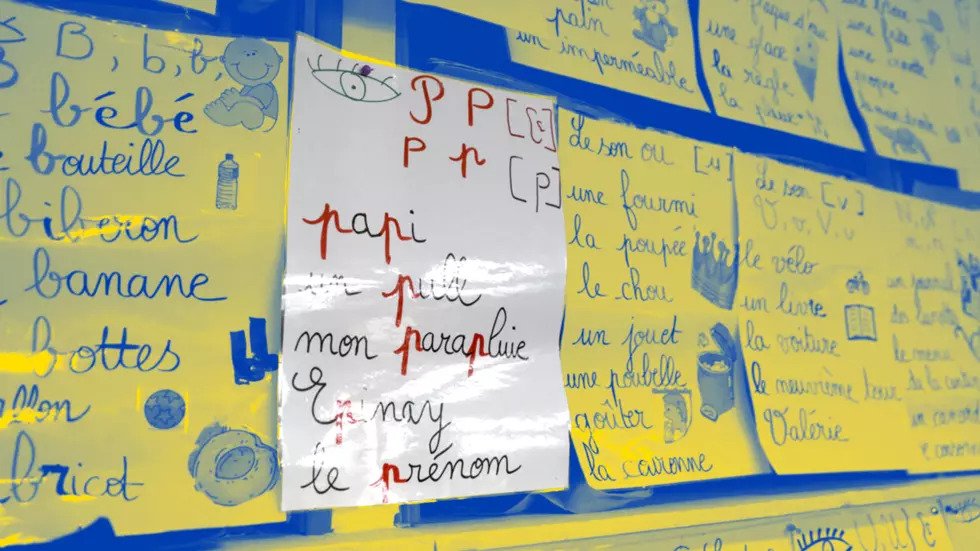
Ukrainian refugee pupils have been placed in schools with special UPE2A units, programmes designed to accommodate foreign children who don’t speak French. Led by teachers like Marie-Laure, these classes help newcomers ease into the French school system gradually, giving them time to familiarise themselves with the language and their classmates.
Over the course of a year, UPE2A students take 21 hours of traditional classes like French, maths, history, English and geography. After the first month, they are allowed to join their francophone peers in sessions that don’t require a school bag (“classes sans cartable”), like P.E., music, or arts and crafts. If by the end of the first year they have reached a high enough level to enter the French school system, they are integrated into a francophone classroom. If not, they can continue the UPE2A programme for one more year. In other words, non-French speakers have two years to catch up.
“It’s essential that the student is integrated into the French school system after those two years,” says Nicolas Monteil, a UPE2A teacher at the Blanc-Mesnil secondary school, northeast of Paris. “Especially when secondary school ends, because that’s when students make their [high school] course choices,” he says.
In France, students can choose to attend three types of high schools: lycée général (academic training), lycée technique (arts, applied sciences or technical training) or lycée professionnel (vocational training). Read More…


