Five Essential Paintings By Manet And Where You Can Find Them
-
 Loading...
 - Sascha Esser
- 06 Jun 2022
- 286 Views
- 0 Like
- 0 Comment
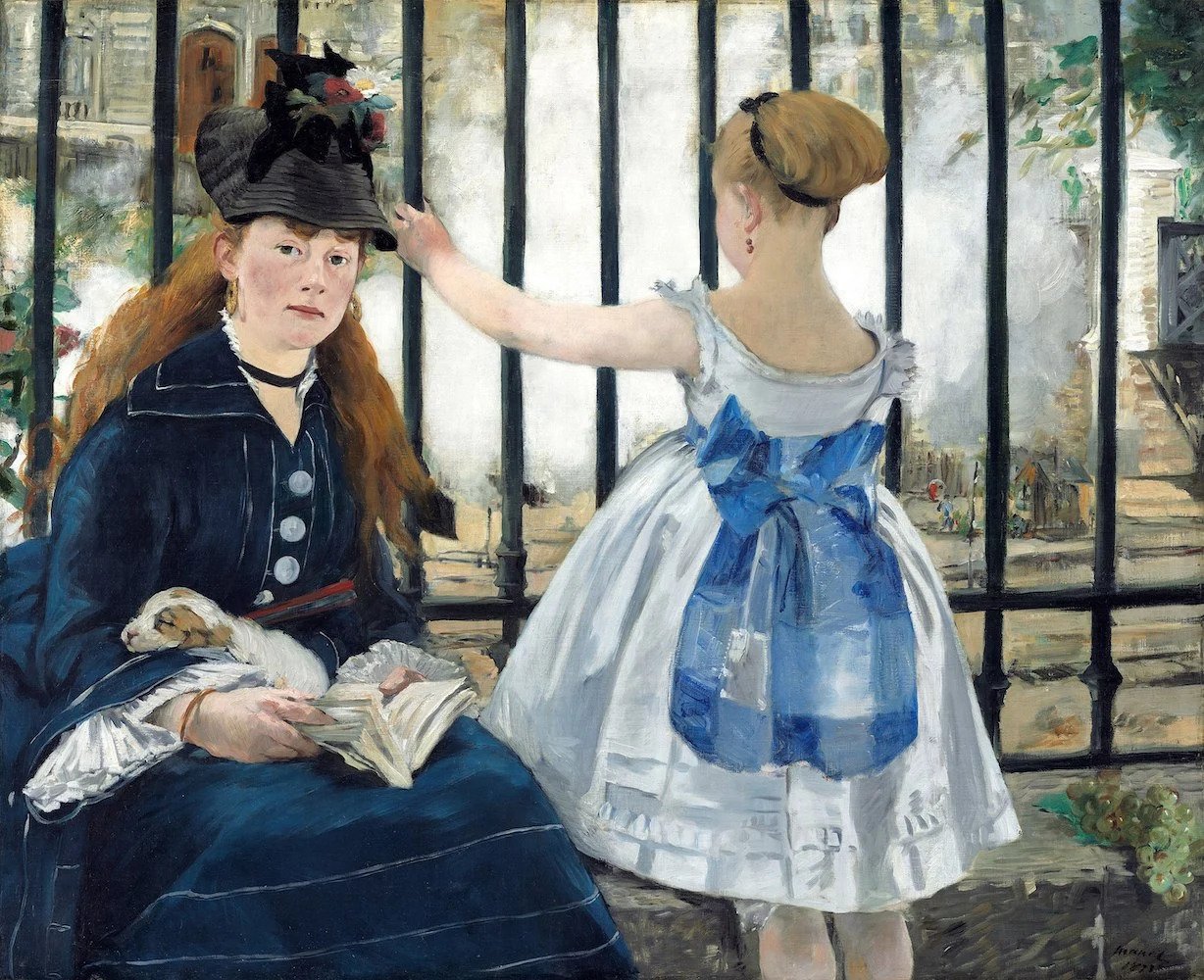
These days, nobody gives much thought to the idea of artistic practice fitting into an overriding narrative of historical progress. The current scene is liberating if shapeless, as artists work from a Greek diner–size menu of options—one that would scarcely have been possible were it not for the 100-year period, beginning in the mid-19th century, when modernity birthed the tropes in use today. And no single artist was arguably as responsible for setting modern art in motion than Édouard Manet.
Manet (1832–1883) was born well-off in Paris to a mother of royal blood and a father who was a respected jurist. From childhood he harbored artistic ambitions, encouraged by an uncle who frequently took to him to the Louvre. By 13, Manet was taking drawing classes, though his father had other ideas for his son’s career, forcing him at one point into an abortive attempt to join the French Navy.
Manet père subsequently became resigned to his son’s aspirations, and Manet began formal training under the history painter Thomas Couture. He also traveled around Europe imbibing Titian, Caravaggio, Vermeer, Rembrandt, and Velázquez, who was an especially important influence along with another Spanish painter, Goya.
Following in the steps of Gustave Courbet, Manet began as a realist, but his loose brushwork, compositional simplicity, and abrupt tonal transitions drew the ire of critics and the French Academy which mounted the annual Salons. When he started to subvert art-historical conventions to the point of near parody, his trajectory as Modernism’s first great apostate was set in motion. Here are five essential paintings tracking his evolution, along with where you can find them.
The Absinthe Drinker (1859), Ny Carlsberg Glyptotek, Copenhagen

This depiction of a vagrant who lurked outside the Louvre is Manet’s first mature painting, and while indebted to Courbet, it evinces a decisive break with him. It pictures a certain type from Paris’s underclass: a rag picker, or chiffonnier, who collects cast-off clothing for resale. He’s seen top-hatted, cloaked, and surrounded by indications (a filled glass, a bottle) of his addiction to absinthe, a potent spirit favored by bohemians.
Measuring six by four feet, a scale usually reserved for portraits of aristocrats, and featuring a flat backdrop and dramatic lighting, it made for a theatrical painting of modern life as seen from the bottom of the social ladder. It was, unsurprisingly, rejected from the Salon that year.
Le Déjeuner sur l’Herbe (1863), Musée d’Orsay, Paris

The reaction to The Absinthe Drinker pales in comparison with that to this pastoral, featuring an unclothed woman picnicking with two attired men. Though it was as naked as its subject in terms of ambition, Le Déjeuner wasn’t the first such scene: Its inspiration, Giorgione’s The Tempest (1508), paired a clothed male with a seminude female nursing a baby.
But Giorgione’s piece is allegorical, while Manet offers no such pretense. Besides presumptuously gazing at the viewer, the woman has her dress piled nearby, as if she’d stripped for the occasion. Modernism’s ur-masterpiece, it was, like The Absinthe Drinker, rejected by the Academy, and subsequently exhibited in the notorious Salon des Refusés of 1863.
Olympia, 1863, Musée d’Orsay, Paris

Painted the same year as Le Déjeuner, Olympia debuted at the 1865 Salon, causing an even greater uproar than its predecessors. Olympia was modeled on Titian’s Venus of Urbino (c. 1534), and like the Titian work, it depicts a recumbent nude with her hand demurely hiding her privates.
But while Titian’s Venus is mythological, Olympia is startlingly contemporary; moreover, the work is planted with signs that its titular subject is a sex worker, starting with her stare, which is more brazen, chilly, and transactional than the nude’s in Le Déjeuner. Other giveaways include the orchid in her hair, her choker, the slipper dangling from her foot, the cat metaphorically standing in for female genitalia, and the bouquet, presumably from a client, being conveyed to her by a Black maidservant—all of which added up to a truly shocking expression of the new. Read More...