Fayrouz Karawya decrypts trends of 19th, 20th century Egyptian songs

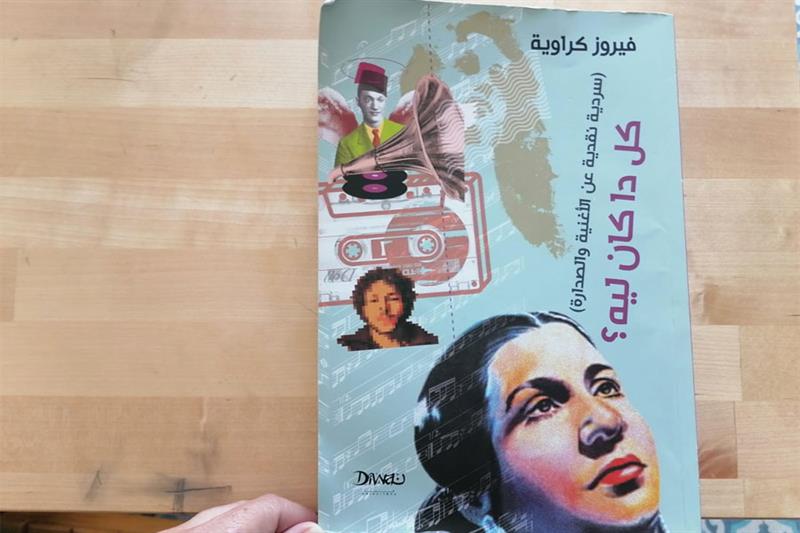
Fayrouz Karawya spoke to Ahram Online, talking about her first critical narrative book, Kol Dah Kan Leih? (“What Was All That For?”), reveals a spiral way of reading the musical history of the late 19th and 20th century Egypt.
Published by Diwan in 2022, Kol Dah Kan Leih? surfs between all the theories, and reflecting on the facts, the book unveils many of the game-changing dynamics that have led to the trends and hits in Egyptian music.
Having attained a diploma from the Arabic Music Institute in 1994 in vocals and lute, she earned her masters degree in cultural studies at AUC in 2009, and will soon present her doctoral thesis in Sorbonne University, Paris. Karawya’s own musical career kicked off in 2006 with her first single, The Coffee Song, written by renowned Egyptian poet Ahmed Haddad and established musician Sherif Elweseeimy.
Known to the independent art scene for her unique voice, and songs that broke away from regular lovers’ yearnings and expressed a more bold image of a woman that has no problem revealing her emotions. Since then, she has experimented with song writing, playing and singing, releasing several hits.
What was all that for?
She laughs, explaining that in 2017 she got a grant from the Arab Fund For Arts and Culture (AFAC).
“It was the first time they offered a grant for critical writing, and I was focused on songs and what oppressed it, and I even wanted to name the book (after Abdel Wahab’s song) Khayef Aqoul Elli Fi Qalbi (‘I Am Scared to Speak my Heart Out’),” Fayrouz Karawya told Ahram Online.
“However, after researching I realised that oppression is one of the factors but the evolution of the song is multifactorial and is not only due to the favouring of the authorities. When I looked at the technology and how switching from the musical theatre to radio to cinema dictates a change in both the music product and the thought of the music composer.”
“When you talk about Sheikh Zakaria Ahmed, you feel that the musical theatre is his factory, where he excelled at the taqtouqa (a short, vivid song; a genre of the early twenties). Abdel Wahab, on the other hand, shines more in cinema because he is more into this form of art.”
“I then realised that this is what defines the diversity between musicians and that writing a narrative needed to reveal that, which lead me to change the title to Kol Dah Kan Leih (‘What was All That For?’) after a song by Abdel Wahab.” Read More…