Extreme Weather Events Claimed 2 Million Lives and Inflicted $4.3 Trillion in Damages over Half a Century: United Nations
-
 Loading...
 - Theo Kennedy
- 23 May 2023
- 77 Views
- 0 Like
- 0 Comment
Extreme weather events have resulted in the loss of more than 2 million lives and caused staggering economic damages exceeding $4.3 trillion over the past five decades, according to the United Nations (UN) weather agency. In a solemn announcement on Monday, the World Meteorological Organization (WMO) emphasized the urgent need for enhanced alert systems to address these extreme weather phenomena by the year 2027.
The Geneva-based agency has consistently highlighted the detrimental impact of human-induced climate change, asserting that elevated global temperatures have amplified the frequency and severity of extreme weather occurrences, such as floods, hurricanes, cyclones, and droughts. WMO also recognized the positive impact of early warning systems in reducing the loss of life associated with climate-related disasters.
Among the countries affected, the United States experienced the most substantial economic losses, totaling $1.7 trillion between 1970 and 2021. Regrettably, over 90% of global fatalities occurred in developing nations.
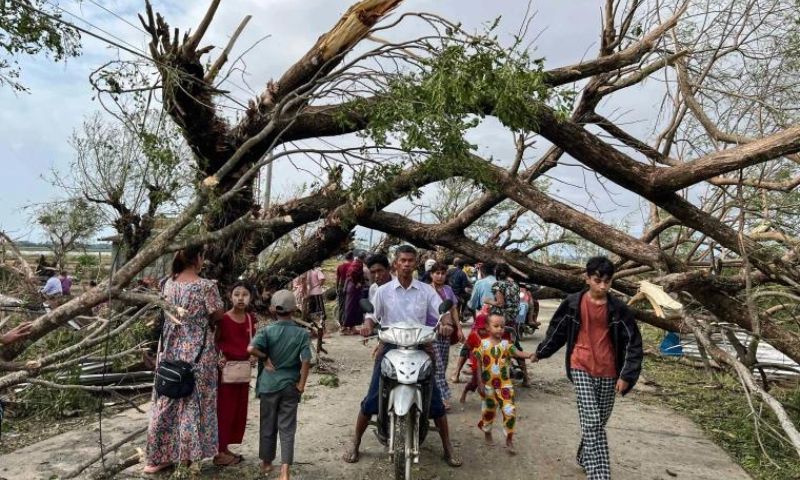
Petteri Taalas, the Secretary-General of WMO, cited the recent cyclonic storm Mocha, which swept across Myanmar and Bangladesh, as an example of vulnerable communities bearing the brunt of weather-related hazards. Taalas emphasized that thanks to improved early warning systems and disaster management, the historically catastrophic mortality rates in these regions have significantly decreased.
Taalas reiterated the crucial role of early warnings in saving lives. The latest update to WMO's Atlas of Mortality and Economic Losses from Weather, Climate, and Water Extremes revealed that extreme temperatures were the leading cause of reported deaths, while floods accounted for the majority of economic losses.
In Africa, more than 1,800 disasters resulted in 733,585 deaths, encompassing weather-related events such as flooding and storm surges. The costliest disaster in the region was Tropical Cyclone Idai in 2019, which caused damages amounting to $2.1 billion. The southwest Pacific faced nearly 1,500 disasters, resulting in 66,951 deaths and economic losses of $185.8 billion. Asia endured over 3,600 disasters, claiming 984,263 lives and causing $1.4 trillion in economic losses, primarily due to the impact of cyclones. South America witnessed 943 disasters, causing 58,484 deaths and economic losses exceeding $115 billion. North America, Central America, and the Caribbean collectively experienced more than 2,100 disasters, leading to 77,454 deaths and economic losses surpassing $2 trillion. Europe encountered close to 1,800 disasters, resulting in 166,492 fatalities and economic losses totaling $562 billion.
In a separate forecast released last week, WMO projected a 66% likelihood that the Earth will experience a year with average temperatures 1.5 degrees Celsius (2.7 degrees Fahrenheit) higher than the mid-19th century within the next five years. This threshold represents a key target outlined in the Paris climate accord of 2015.