Home Upload Photo Upload Videos Write a Blog Analytics Messaging Streaming Create Adverts Creators Program
Bebuzee Afghanistan Bebuzee Albania Bebuzee Algeria Bebuzee Andorra Bebuzee Angola Bebuzee Antigua and Barbuda Bebuzee Argentina Bebuzee Armenia Bebuzee Australia Bebuzee Austria Bebuzee Azerbaijan Bebuzee Bahamas Bebuzee Bahrain Bebuzee Bangladesh Bebuzee Barbados Bebuzee Belarus Bebuzee Belgium Bebuzee Belize Bebuzee Benin Bebuzee Bhutan Bebuzee Bolivia Bebuzee Bosnia and Herzegovina Bebuzee Botswana Bebuzee Brazil Bebuzee Brunei Bebuzee Bulgaria Bebuzee Burkina Faso Bebuzee Burundi Bebuzee Cabo Verde Bebuzee Cambodia Bebuzee Cameroon Bebuzee Canada Bebuzee Central African Republic Bebuzee Chad Bebuzee Chile Bebuzee China Bebuzee Colombia Bebuzee Comoros Bebuzee Costa Rica Bebuzee Côte d'Ivoire Bebuzee Croatia Bebuzee Cuba Bebuzee Cyprus Bebuzee Czech Republic Bebuzee Democratic Republic of the Congo Bebuzee Denmark Bebuzee Djibouti Bebuzee Dominica Bebuzee Dominican Republic Bebuzee Ecuador Bebuzee Egypt Bebuzee El Salvador Bebuzee Equatorial Guinea Bebuzee Eritrea Bebuzee Estonia Bebuzee Eswatini Bebuzee Ethiopia Bebuzee Fiji Bebuzee Finland Bebuzee France Bebuzee Gabon Bebuzee Gambia Bebuzee Georgia Bebuzee Germany Bebuzee Ghana Bebuzee Greece Bebuzee Grenada Bebuzee Guatemala Bebuzee Guinea Bebuzee Guinea-Bissau Bebuzee Guyana Bebuzee Haiti Bebuzee Honduras Bebuzee Hong Kong Bebuzee Hungary Bebuzee Iceland Bebuzee India Bebuzee Indonesia Bebuzee Iran Bebuzee Iraq Bebuzee Ireland Bebuzee Israel Bebuzee Italy Bebuzee Jamaica Bebuzee Japan Bebuzee Jordan Bebuzee Kazakhstan Bebuzee Kenya Bebuzee Kiribati Bebuzee Kuwait Bebuzee Kyrgyzstan Bebuzee Laos Bebuzee Latvia Bebuzee Lebanon Bebuzee Lesotho Bebuzee Liberia Bebuzee Libya Bebuzee Liechtenstein Bebuzee Lithuania Bebuzee Luxembourg Bebuzee Madagascar Bebuzee Malawi Bebuzee Malaysia Bebuzee Maldives Bebuzee Mali Bebuzee Malta Bebuzee Marshall Islands Bebuzee Mauritania Bebuzee Mauritius Bebuzee Mexico Bebuzee Micronesia Bebuzee Moldova Bebuzee Monaco Bebuzee Mongolia Bebuzee Montenegro Bebuzee Morocco Bebuzee Mozambique Bebuzee Myanmar Bebuzee Namibia Bebuzee Nauru Bebuzee Nepal Bebuzee Netherlands Bebuzee New Zealand Bebuzee Nicaragua Bebuzee Niger Bebuzee Nigeria Bebuzee North Korea Bebuzee North Macedonia Bebuzee Norway Bebuzee Oman Bebuzee Pakistan Bebuzee Palau Bebuzee Panama Bebuzee Papua New Guinea Bebuzee Paraguay Bebuzee Peru Bebuzee Philippines Bebuzee Poland Bebuzee Portugal Bebuzee Qatar Bebuzee Republic of the Congo Bebuzee Romania Bebuzee Russia Bebuzee Rwanda Bebuzee Saint Kitts and Nevis Bebuzee Saint Lucia Bebuzee Saint Vincent and the Grenadines Bebuzee Samoa Bebuzee San Marino Bebuzee São Tomé and Príncipe Bebuzee Saudi Arabia Bebuzee Senegal Bebuzee Serbia Bebuzee Seychelles Bebuzee Sierra Leone Bebuzee Singapore Bebuzee Slovakia Bebuzee Slovenia Bebuzee Solomon Islands Bebuzee Somalia Bebuzee South Africa Bebuzee South Korea Bebuzee South Sudan Bebuzee Spain Bebuzee Sri Lanka Bebuzee Sudan Bebuzee Suriname Bebuzee Sweden Bebuzee Switzerland Bebuzee Syria Bebuzee Taiwan Bebuzee Tajikistan Bebuzee Tanzania Bebuzee Thailand Bebuzee Timor-Leste Bebuzee Togo Bebuzee Tonga Bebuzee Trinidad and Tobago Bebuzee Tunisia Bebuzee Turkey Bebuzee Turkmenistan Bebuzee Tuvalu Bebuzee Uganda Bebuzee Ukraine Bebuzee United Arab Emirates Bebuzee United Kingdom Bebuzee Uruguay Bebuzee Uzbekistan Bebuzee Vanuatu Bebuzee Venezuela Bebuzee Vietnam Bebuzee World Wide Bebuzee Yemen Bebuzee Zambia Bebuzee Zimbabwe
Blog Image

Extinct monitor lizard had four eyes, fossil evidence shows

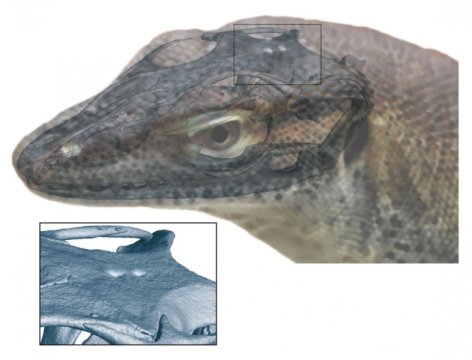
This image depicts a reconstruction of what the extinct monitor lizard might have looked like. The parietal and pineal foramina are visible on the overlaid skull. Credit: Senckenberg Gesellschaft für Naturforschung / Andreas Lachmann / Digimorph.org

Researchers reporting in Current Biology on April 2 have evidence that an extinct species of monitor lizard had four eyes, a first among known jawed vertebrates. Today, only the jawless lampreys have four eyes.

The third and fourth eyes refer to pineal and parapineal organs, eye-like photosensory structures on the top of the head that play key roles in orientation and in circadian and annual cycles. The new findings help to elucidate the evolutionary history of these structures among vertebrates.

The photosensitive pineal organ is found in a number of lower vertebrates such as fishes and frogs, the researchers explain. It's often referred to as the "third eye" and was widespread in primitive vertebrates.

"On the one hand, there was this idea that the third eye was simply reduced independently in many different vertebrate groups such as mammals and birds and is retained only in lizards among fully land-dwelling vertebrates," says Krister Smith at the Senckenberg Research Institute in Germany. "On the other hand, there was this idea that the lizard third eye developed from a different organ, called the parapineal, which is well developed in lampreys. These two ideas didn't really cohere.

"By discovering a four-eyed lizard -- in which both pineal and parapineal organs formed an eye on the top of the head -- we could confirm that the lizard third eye really is different from the third eye of other jawed vertebrates," Smith continues.

Smith and his colleagues got the idea that the fossilized lizards might have a fourth eye after other experts came to contradictory conclusions about where the lizard's third eye was located.

Smith said that the first question to explore the "wacky" idea of a lizard with four eyes was, does this unusual feature occur in more than one individual of the same age? They turned to museum specimens collected nearly 150 years ago at Grizzly Buttes as part of the Yale College Expedition to the Bridger Basin, Wyoming. And, it turned out that the answer to their question was yes. CT scans showed that two different individuals had spaces where a fourth eye would have been, which, Smith says, "I certainly did not expect!"

Their evidence confirms that the pineal and parapineal glands weren't a pair of organs in the way that vertebrate eyes are. They also suggest that the third eye of lizards evolved independently of the third eye in other vertebrate groups.

Smith says that while there's "nothing mystical" about the pineal and parapineal organs, they do enable extraordinary abilities. For instance, they allow some lower vertebrates to sense the polarization of light and use that information to orient themselves geographically.

Scientists still have a lot to learn about the evolution of these organs and their functions in living animals, the researchers say. The new findings are a reminder of the hidden value within fossils left lying around in museums for more than a century.

"The fossils that we studied were collected in 1871, and they are quite scrappy -- really banged up," Smith says. "One would be forgiven for looking at them and thinking that they must be useless. Our work shows that even small, fragmentary fossils can be enormously useful."

Previous Post

Deep inside Perseus A – A telescope larger than the Earth makes a sharp image of the formation of black hole jets in the core of a radio galaxy

Next Post

Newly discovered hormone helps keep plants from dehydrating

Comments