Experts from the Ministry of Education and Science and RIO will prepare a new system for studying history in higher education
-
 Loading...
 - bethany maria
- 19 Jul 2022
- 105 Views
- 0 Like
- 0 Comment
When the working group on the development of the "Concept for teaching history in universities" conducted a survey - how many of the 72 hours of the history course in non-core universities are devoted to the study of the Great Patriotic War, it turned out - 15 minutes. Moreover, 99.6% of students study history outside their profile, 0.4% - according to their profile, that is, at historical faculties. "It's not humane," experts from the Ministry of Education and Science and the RIO decided, and by September 1 they are preparing a new system for studying history in higher education.
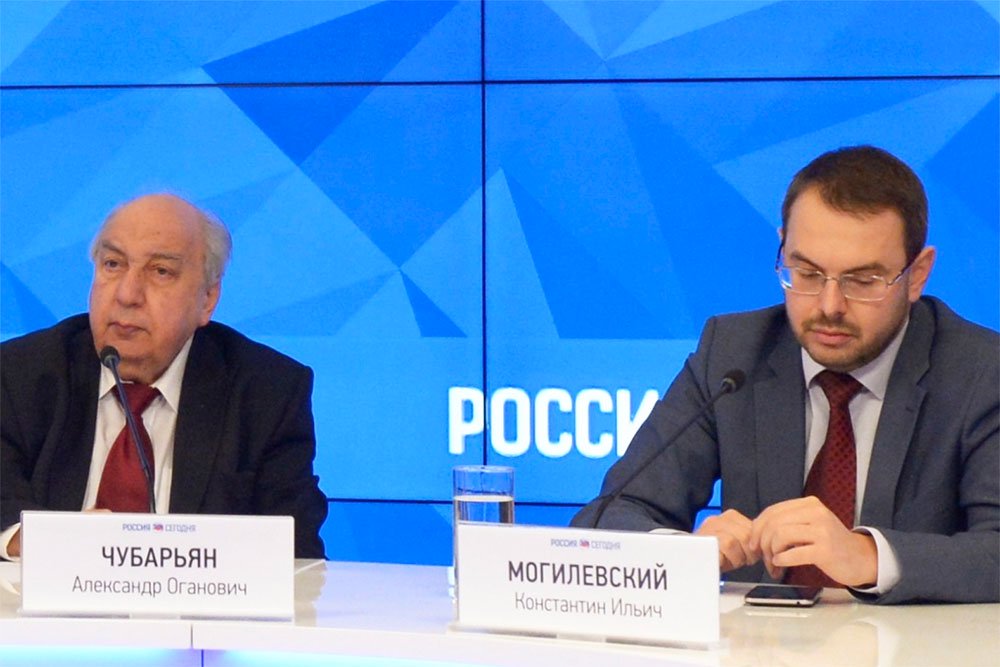
Now the non-core study of history by students will be not 72 hours per semester, but twice as much - 144 hours. Not only the volume, but also the format of teaching will change. If earlier up to 80% of teaching hours and more were allotted for independent and distance learning of history, especially in technical universities where a test was taken in history, now the priorities are changing dramatically. According to the new "Concept", preference is given to contact work or live study of history. The workload is distributed as follows: in full-time education - 80% "live" lectures, in correspondence - 40% of contact teaching. The rest of the time, distance learning under the guidance of a teacher is allowed. The non-core subject "History" will no longer be studied independently. "It leads to profanity, - Konstantin Mogilevsky, chairman of the board of the Russian Historical Society, is convinced. - We are for systemic education. It implies knowledge of the country's history, at a minimum. "Therefore, instead of credit for non-core study of history, an exam in this discipline is also being introduced. But the main thing is that a new cultural standard for studying history in universities is being developed. It is based on the already implemented standard for studying history in high school. True , the updated "Concept" will distinguish between the cultural standard of studying history in specialized, humanitarian and non-core universities. But the main thing is that a new cultural standard for the study of history in universities is being developed. It is based on the already implemented standard for studying history in high school. True, the updated "Concept" will distinguish between the cultural standard of studying history in specialized, humanitarian and non-core universities. But the main thing is that a new cultural standard for the study of history in universities is being developed. It is based on the already implemented standard for studying history in high school. True, the updated "Concept" will distinguish between the cultural standard of studying history in specialized, humanitarian and non-core universities.
- In the first place is still the growth of teaching in specialized universities, where there is a lack of methodology, especially in new subjects of modern history, - says Alexander Chubaryan, scientific director of the Institute of World History of the Russian Academy of Sciences. - In second place are non-core universities. Here the realizable task, as in high school, is to simultaneously teach the course of general history with the national one. We have prepared a new version of teaching methods that overcome the Eurocentrism of history. Information on world history included courses on the creation of colonial empires, the struggle against colonialism in Asia, Africa, and Latin America. At the same time, the history of Russia will be studied in the context of world history, especially in the 19th and 20th centuries - the role of Russia in the fight against the Napoleonic empire, the arrangement of the world by the Congress of Vienna in 1815, the Weimar Peace, Yalta-1945. Read More…