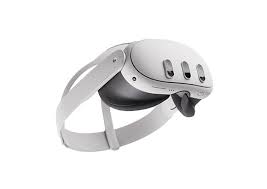
Enhancing Virtual Experiences with Windows Mixed Reality Headsets
-
 Loading...
 - Anastasia Green
- 09 Sep 2024
- 77 Views
- 0 Like
- 0 Comment
Windows Mixed Reality headsets blend the physical and digital worlds, offering immersive experiences in gaming, productivity, and education. With user-friendly setup, versatility, and web-based AR integration, WMR is revolutionizing mixed reality.
Windows Mixed Reality (WMR) headsets have revolutionized the way users experience digital environments. These devices seamlessly blend the physical and digital worlds, offering immersive experiences that enhance gaming, productivity, and social interactions. As the demand for mixed reality grows, the technology continues to evolve, offering increasingly sophisticated features that appeal to both consumers and developers.
Windows Mixed Reality headsets stand out in the competitive landscape of virtual and augmented reality devices. These headsets are designed to provide an accessible yet powerful gateway into mixed reality, leveraging the strengths of both virtual reality (VR) and augmented reality (AR).
Here’s a breakdown of what makes Windows Mixed Reality headsets a compelling choice:
1. User-Friendly Setup: Unlike many VR headsets that require external sensors, WMR headsets offer an inside-out tracking system. This simplifies the setup process, as the headset can accurately track movements using built-in cameras and sensors, eliminating the need for additional hardware.
2. Compatibility and Versatility: Windows Mixed Reality headsets are compatible with a wide range of devices and platforms. Whether for gaming, design, or educational purposes, these headsets work seamlessly with various applications, offering flexibility to users.
3. Enhanced Immersion: The combination of high-resolution displays and spatial audio in WMR headsets enhances the sense of immersion, making virtual environments more realistic and engaging. This is crucial for applications where realism and depth of experience are key, such as simulations and interactive storytelling.
4. Expanding Use Cases: The adoption of Windows Mixed Reality headsets is expanding beyond gaming into fields like education, healthcare, and enterprise solutions. For instance, in education, these headsets are used to create interactive learning environments that help students grasp complex concepts through visual and hands-on experiences.
5. Web-Based Augmented Reality: Integrating web-based augmented reality (AR) capabilities with Windows Mixed Reality opens up new possibilities for businesses and developers. This combination allows users to experience AR content directly through web browsers, without the need for dedicated apps. It’s a significant advantage for companies looking to offer AR experiences with lower barriers to entry.
6. Support from Leading AR & VR App Development Companies: The growth of Windows Mixed Reality has attracted the attention of AR & VR app development companies. These companies are continually innovating to create apps that leverage the unique features of WMR headsets, from immersive games to productivity tools that redefine how users interact with digital content.
Conclusion
Windows Mixed Reality headsets are transforming the landscape of digital interaction by merging the best aspects of VR and AR into one versatile device. With user-friendly features, expansive compatibility, and strong support from AR & VR app development companies, WMR headsets are poised to play a pivotal role in the future of mixed reality experiences. Whether for personal use, business applications, or educational purposes, these headsets offer a glimpse into the future of how we’ll engage with both the physical and digital worlds.