'Emotional' Theresa May begs her own MPs for unity as she survives crunch Brexit rebel showdown
-
 Loading...
 - Agnes Johnson
- 24 Oct 2021
- 876 Views
- 0 Like
- 0 Comment
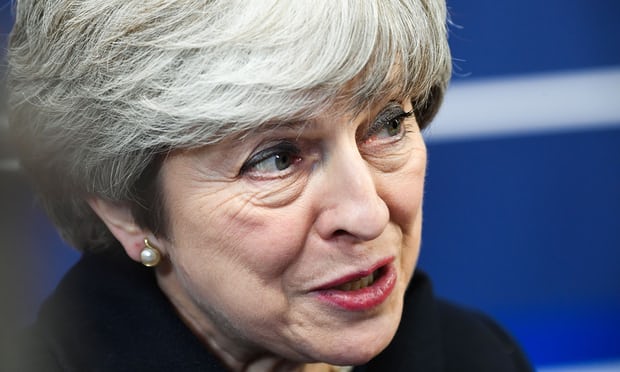
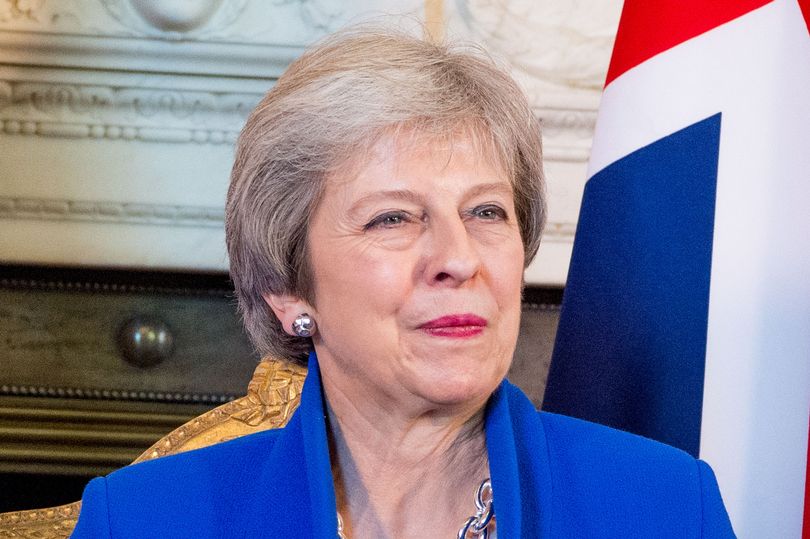
“Emotional” Theresa May tonight pleaded for Tory unity as she survived a crunch showdown with rebel Conservatives.
The Prime Minister spent 45 minutes at the party’s 1922 backbench Committee, which holds her fate in its hands, as she begged them to support her Brexit plan.
Her dramatic appearance came after she was urged to “bring a noose” to the meeting, which had been billed as a “show trial”.
MPs banged desks and doors as she rose to speak.
Former Home Secretary Amber Rudd said later: “She spoke quite emotionally about why she was doing this for the good of the country and how it was important that the public an dour party members realised we were behind her and that we all wanted the same thing.
“She looked like she really meant it. She wasn’t reading from a script, she was talking frankly and honestly from the heart about she was doing this and why it mattered.
“This was a very earnest an it felt listening to her very heartfelt.”
Flamboyant backbencher Michael Fabricant described the meeting as “not Daniella in the lions’ den, it’s a petting zoo”.
Another MP said: “She’s like my mother - and my mother is 95.”
MPs began filing into the Gladstone Room, room number 14 on the oak-panelled corridor in the Palace of Westminster, from 5.20pm.
The PM 's talks with her Czech counterpart were running late in No 10, and she had to get ready for a Buckingham Palace State Banquet for the King and Queen and the Netherlands immediately after the highly-charged appearance in front of her MPs.
One fresh-faced MP struggled to open the door, another arrived in full black tie and a Brexiteer turned up seemingly wearing his Sunday gardening clothes of grey trainers, brown jeans and dark pullover.
An ex-Cabinet Minister pretended to be on the their phone as they navigated the gauntlet of 40 journalists.
The “call” ended as soon as they reached the sanctuary of the guarded doorway.
The PM arrived flanked by her chief of staff Gavin Barwell, operations boss Richard “Tricky” Jackson and a quartet of bodyguards.
The choreographed banging of desks – and even doors – began immediately.
Even the PM's dedicated protection officers – who never knowingly crack smiles while on duty – allowed themselves a smile when one journalist joked the door banging meant Mrs May was already demanding to be let out.
Six minutes after the tense meeting kicked off, a stream of Tory peers emerged. Were the Lords and Ladies the first wave of those storming out in protest at the PM's stubborn adherence to her Brexit blueprint?
No, the division bell had run in the Upper Chamber and they needed to vote.
Moments later a Cabinet Brexiteer left, telling journalists through gritted teeth the PM's speech was simply “great”.
A Remain-backing former minister said icily and ironically there was “a total outbreak of unity”.
On a dramatic day, Mrs May was openly mocked in the European Parliament, a poll revealed voters’ frustration with her Brexit strategy and she was hit by the retirement of Britain’s top civil servant who quit to recover from cancer.
Paying tribute to Cabinet Secretary and Civil Service chief Sir Jeremy Heywood, the PM said: “He has worked constantly to improve our country’s future and to deliver for the public, serving prime ministers and ministers of all parties with distinction in the finest traditions of the Civil Service.”
National security Adviser Sir Mark Sedwill, who has been filling in since Sir Jeremy went on sick leave in June, was immediately installed as his replacement.
It came as a poll showed 64% of Conservatives do not back the PM to secure a good deal - up 11 points from last month.
Overall, 78% of people surveyed by Ipsos MORI were pessimistic about the her ability to seal a good deal with Brussels, up from 70% a month ago.
Just 19% have confidence in Mrs May’s handling of Brexit, down from 28% when the survey was last carried out.
Urging Tories to topple the PM, former UKIP leader Nigel Farage said: “Unless the Conservative Party comes to its senses and gets rid of a leader who clearly is being led by the nose, we will head to the December summit, we will head to a humiliating sell-out and we will head to the UK being trapped in EU rules for many, many years to come.”
He branded the PM’s top Brexit negotiator Olly Robbins an “enemy within” attempting to sabotage withdrawal.
“The problem is that there is a rogue element in these negotiations, a group of people who don’t wish to see a solution, who put up a brick wall to stop us breaking free,” the MEP told the European Parliament.
“It is not your chief negotiator Michel Barnier, it is actually the British civil service, Olly Robbins’ team.
“They signed up years ago to the European dream. They have been happy to take their orders from Brussels.
“They are now out to sabotage Brexit. They are indeed the enemy within.”
It comes amid reports her blueprint could leave the UK in a “long-running” multi-year transition - despite her promising it would only last a few months.
Leaked documents admit her plan “could, in theory, lead to a long-running IP (implementation period)”.
The arrangement could be agreed on a “rolling” basis with an “annual decision point” where it is reviewed every 12 months.
In Brussels, the European Parliament’s Brexit chief mocked Mrs May for claiming 95% of the exit deal was complete. Guy Verhofstadt told MEPs: “We are now in a battle of the figures.
“Mrs May says 95% has been agreed, Michel Barnier says 90% has been agreed.
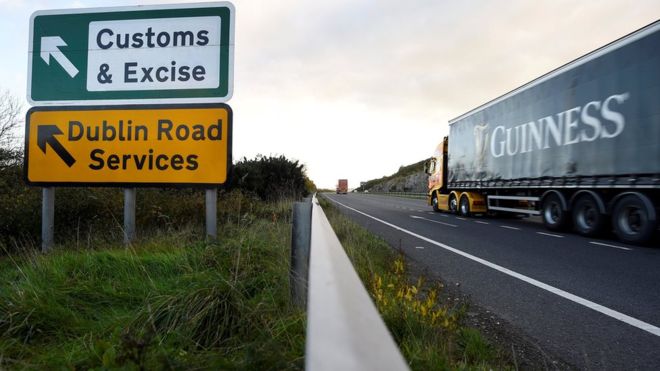
“I know Britain has always had difficulties with the metric system. If it is 90% or 95% or 99%, if there is no solution for the Irish border, for our Parliament it is 0% that is agreed at the moment.”
European Parliament President Antonio Tajani warned that without a backstop to keep the Irish border open “it will be very difficult for Parliament to vote in favour of the Brexit treaty”.
The chances of Brexit negotiators striking a deal are “very adversely affected” by politics in Britain, Irish Prime Minister Leo Varadkar.
The UK is “a country that is very divided,” he told Ireland’s parliament.
Meanwhile, the world’s airline industry body called on UK and European Union aviation authorities to thrash out plans to keep planes flying.
“It is now essential that the EU and UK civil aviation authorities plan for contingency arrangements to maintain a minimum level of connectivity, which is vital for people and for business,” International Air Transport Association director-general Alexandre de Juniac said in a statement.
“A backstop contingency plan to keep planes flying after March must be published, and quickly.”