Ecuador becomes first country to give legal rights to wild animals: What does this mean for conservation?

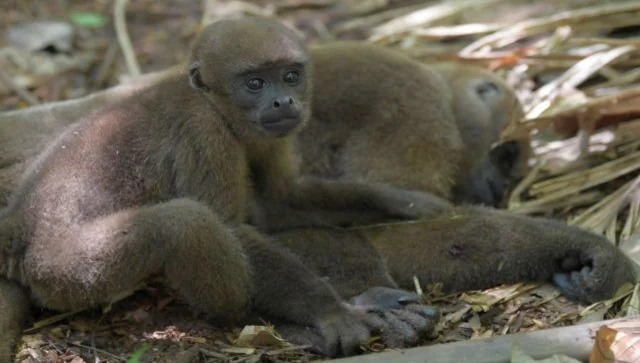
The historic decision came as the country’s highest court heard the case of a woolly monkey named Estrellita, who was taken from the wild when she was only one-month-old and was raised as a pet but died within a month after it was shifted to a zoo
At a time when the world is battling climate change and exploitation of animals, Ecuador, in South America, has made history by becoming the first country to recognise the legal rights of individual wild animals.
The 7-2 ruling by the top court in the country, handed down last month, is believed to be the first time a court has applied the rights of nature — laws that recognise the legal rights of ecosystems to exist and regenerate — to an animal, a woolly monkey named Estrellita.
Here’s a look at what the case was all about, what the court said about the ruling and why it is significant development across the world.
Estrellita case
The landmark ruling by the Quinto court came when it was hearing a case related to Estrellita, a woolly monkey.
Estrellita was one-month-old when she was taken away from the forest illegally; for 18 years thereafter, she was kept as a pet.
Estrellita was then seized by local authorities and suffered a sudden cardio-respiratory arrest within a month of being relocated to a zoo, where she passed away.
In the meantime, her owner, librarian Ana Beatriz Burbano Proaño filed a habeas corpus petition — a legal mechanism to determine if the detention of an individual is valid. She asked for Estrellita to be returned to her and for the court to declare that the monkey’s rights had been violated.
The case snaked its way through Ecuador’s legal system, landing before the Constitutional Court in December of last year.
In its ruling, the court noted that both the authorities and Burbano violated Estrellita's rights, the former for failing to consider her specific needs before relocating her and the latter for removing her from the wild in the first place. It is important to note here that owning wild animals is illegal in Ecuador.
The court order and its effect on Ecuador’s wild animals
Delivering its judgment in the case, the apex court of Ecuador said that wild animals have the right "not to be hunted, fished, captured, collected, extracted, kept, retained, trafficked, marketed or exchanged" and the right to the "free development of their animal behaviour, which includes the guarantee of not being domesticated and not forced to assimilate human characteristics or appearances."
Those rights emanate from animals’ innate and individual value, and not because they are useful to human beings, the court further added.
The court also called for Ecuador's ministry of wildlife to create more rules and procedures to ensure that the constitutional rights of wild animals are respected.
Speaking to Inside Climate News, Kristen A Stilt, a Harvard law professor and faculty director of the school’s Brooks McCormick Jr Animal Law and Policy Program, said that the Ecuador court’s ruling was a milestone.
"Typically environmental law has not concerned itself with animals that aren’t considered important species, such as endangered species covered by the US Endangered Species Act. There is a reckoning starting to happen that is breaking down the silos of animal law and environmental law, and this case is an important part of that development,” she said.
Ecuadorian environmental lawyer Hugo Echeverría in a report published, also hailed the court's ruling. "The verdict raises animal rights to the level of the constitution, the highest law of Ecuador. While rights of nature were enshrined in the constitution, it was not clear prior to this decision whether individual animals could benefit from the rights of nature and be considered rights holders as a part of nature. The court has stated that animals are subject of rights protected by rights of nature."
This ruling could also help in setting precedence at a time when the world is facing its sixth mass extinction, the worst loss of life on the planet since the time of the dinosaurs. Read More...