DSLR Vs Mirrorless: Which is Best?
-
 Loading...
 - Felix Ansong
- 26 Sep 2022
- 81 Views
- 0 Like
- 0 Comment
If you’re looking for a ‘serious’ camera, your key choice will usually be DSLR vs mirrorless. If you’re not sure what the differences are – or which is better – you’ve come to the right place.
Mirrorless is newer technology, which almost all of the major manufacturers are concentrating on. Very few DSLRs have been released in recent years, even from the ‘big two’ of Canon and Nikon, who for many years rejected seriously entering the mirrorless market.
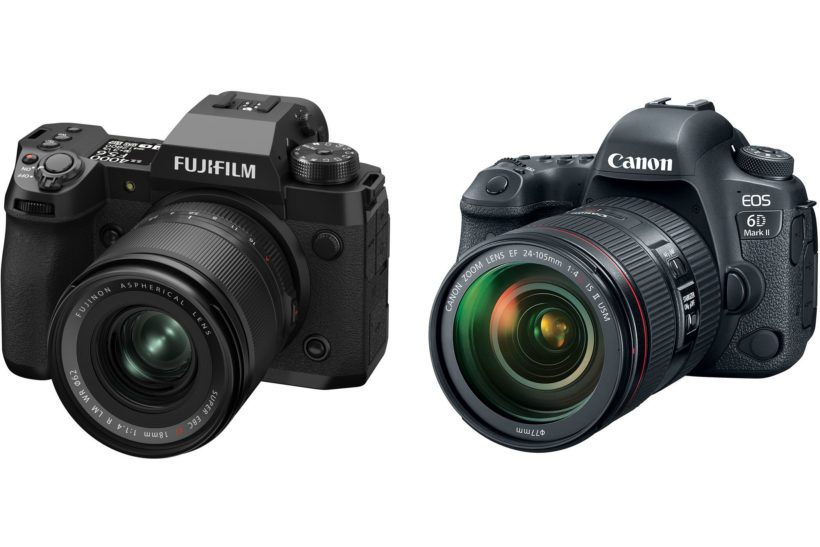
Today, mirrorless cameras are manufactured by Canon (full frame and APS-C), Nikon (full frame and APS-C), Sony (full frame and APS-C), Fujifilm (medium format and APS-C), Panasonic (full frame and Micro Four Thirds) and OM System (Micro Four Thirds). By contrast DSLRs are manufactured by Canon, Nikon and Pentax (with only the latter releasing anything new in the last couple of years).
If you’re confused by all of those different formats, don’t forget to check out our guide to full-frame vs APS-C, which has lots of answers for you.
It’s easy to assume that if you’re buying a new camera, a mirrorless model is the obvious answer. There are, however, still some benefits to picking up a DSLR – or sticking with your existing camera, not least the significant cost advantage.
In this piece, we’ll be explaining the key differences between the formats, to help you decide which is the right one to buy.
DSLR vs mirrorless: what are the key differences?
As you might imagine from the name, the biggest difference between a mirrorless camera and a DSLR is the lack of a mirror inside the former.
The mirror inside a DSLR bounces light up into the optical viewfinder, allowing you to compose your image. With a mirrorless camera, the light goes directly to the image sensor, allowing a preview to be shown via an electronic viewfinder or screen.
Both DSLRs and mirrorless cameras can often have the same or very similar specifications, and in essence can be capable of roughly the same kind of final image quality. By removing the mirror, however, how images are captured is different – for example, mirrorless cameras can typically shoot at faster frame rates since a mirror doesn’t need to move out of the way first.
There are downsides and upsides to both types of format, as we’ll see below.
What are the benefits of DSLRs?
Better battery life
It might seem obvious that removing the mirror to allow for real-time image preview, faster frame rates and silent shooting is better. However, the big downside comes at the expense of power, with mirrorless cameras requiring a lot more of it. Particularly in the early days of mirrorless technology, this was a big problem for enthusiasts looking to shoot for long periods of time. Read More...