Dangers of Nigeria's skin bleaching trend
-
 Loading...
 - Bunmi Adeleke
- 27 Jan 2022
- 456 Views
- 0 Like
- 0 Comment
According to the World Health Organisation (WHO), 77 per cent of women in Nigeria use skin lightening products, the world’s highest percentage.
Mariam Akande, a 32-year-old graduate of political science, now self-employed, owns organic stores in the nation’s capital Abuja.
According to her, sales have tripled since she started the business, with customers nationwide.
“When I started in 2017, I had few customers, I was trained in Lagos, a skin therapist put me through.
“I can’t complain at all, business is thriving, we get orders everywhere, I have an online marketing team who makes sure online customers get their orders timely.”
For Akande, raw materials were sourced locally and readily available, with routine trainings for intended skin care enthusiasts.
In Nigeria, beauty standards, often promoted by the media and advertising companies, have erroneously reinforced that lighter skin tone is more desirable, forcing men and women to bleach.
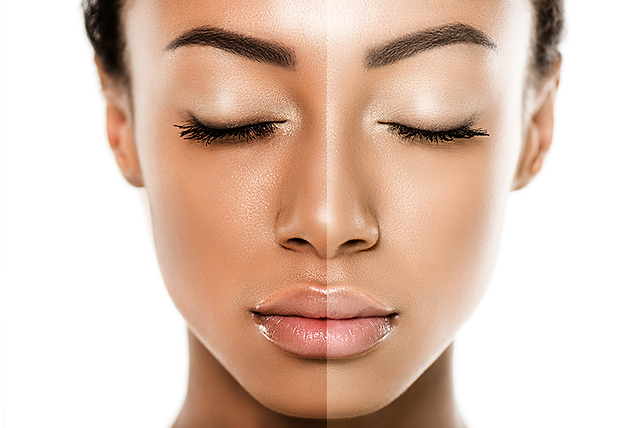
Skin bleaching products are reported to contain ingredients that prevent the production of melanin, the body chemical that darkens skin.
One of such ingredient is hydroquinone, a depigmenting agent used to lighten the skin.
Even though the practice has been associated with a number of adverse health effects including skin cancer, kidney, liver or nerve damage, there appears to be no end in sight.
Pills and injectables, containing bleaching ingredients like glutathione, have now become the new frontiers for those seeking a lighter complexion.
Such intravenous infusions, mostly patronised by the affluent is readily available in many skin clinics.
According to Mr Iruedo Osaruwense, a public affairs analyst, skin bleaching or skin lightening in Nigeria may possibly be likened to male preference, with many men preferring light skinned girls.
“There are terms used to describe light skinned girls here in Nigeria, `oyinbo pepper,’ `yellow pawpaw’ and many more. How many terms do we have for dark skinned women?
“Even if those terms exist, it can be degrading. I will always remember one, `blacky shadow,’ that’s because I was called that.
“So in the scale of attraction, light skinned girls rank higher. Nigerian musicians have made it easy for women to understand light skinned women are preferred.
“Omo Pupa’ by Victor Olaiya is one example. Should we leave the music directors out? No. They prefer to use fair skin vixens in their videos because they think they appear better on High Definition.
“What of the banks? The new generation banks will choose a light skinned girl over a darker one.’’ Read More…