Chinese Xuntian Space Telescope to unravel cosmic mysteries in 2023

China's first large flagship telescope, slated to be launched at the end of 2023, is expected to provide humankind with fresh knowledge about distant galaxies, mysterious dark matter and dark energy, and the past and future evolutions of the universe.
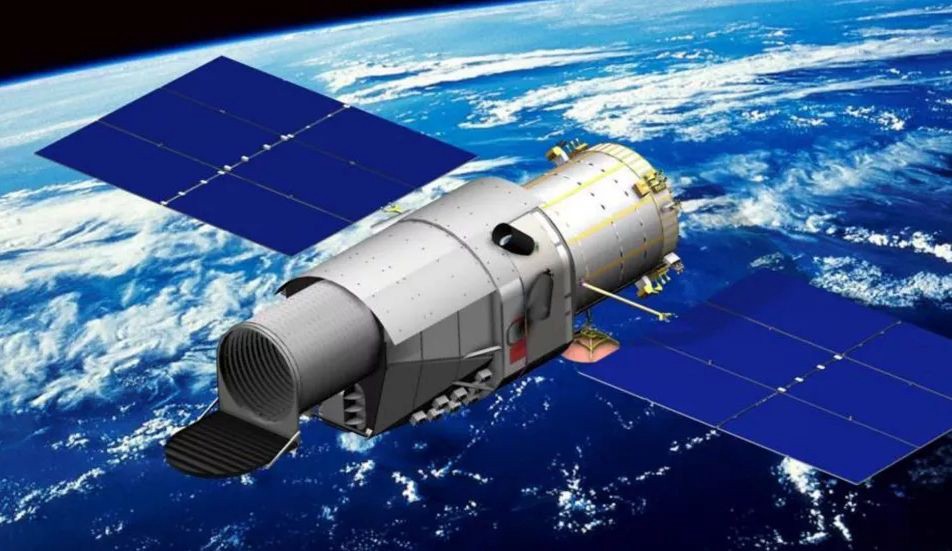
The Chinese Survey Space Telescope, also known as the Chinese Space Station Telescope (CSST), or Xuntian (meaning "survey to heavens" in English) Space telescope, is a space-based optical observatory for astronomers to carry out sky surveys, capturing a general map or images of the sky.
Wide-field telescope
The CSST is a bus-sized facility with a length equal to that of a three-storied building. It has an aperture of two meters, a bit smaller than the Hubble Space Telescope, but its field of view is 350 times larger than Hubble in area, said Liu Jifeng, deputy director of National Astronomical Observatories Of China (NAOC).
"The field of view is the area of the sky a telescope can see at one time," said Li Ran, project scientist of the CSST Scientific Data Reduction System. Hubble's field of view is approximately 1 percent of the size of a fingernail at an arm's length, thereby the telescope, in its thirties, observed only a tiny fraction of the sky, Li added.
The CSST, under construction, has a three-mirror anastigmat design that helps it achieve superior image quality within a large field of view, according to the researchers.
Also, it is a Cook-type off-axis telescope without obstruction that can, in principle, achieve better precisions in photometry, position and shape measurements when properly sampled.
"It has an advantage for survey observations since it can scan a large part of the universe fairly quickly," said Zhan Hu, project scientist of the CSST Optical Facility.
The CSST will be installed with five instruments including a Survey Camera. The main focal plane of the camera is equipped with 30 81-megapixel detectors that will take images and spectra of roughly 17,500 square degrees of the median-to-high galactic latitude and median-to-high ecliptic latitude sky in multiple bands, according to the researchers.
Another four instruments mounted on the CSST are designed to observe individual objects or small fields, like mapping star-forming regions of the Milky Way, obtaining instantaneous color of fast varying objects such as comets and spinning asteroids, studying the co-evolution of supermassive black holes and galaxies and star formation in the nearby part of the universe, and direct imaging of exoplanets in the visible.
CSST is likely to be the largest space telescope for astronomy in the near-ultraviolet and visible in the decade before 2035, Zhan said.
Li used the analogy of photographing a sheep flock to explain CSST's capabilities. "Hubble may see a sheep but the CSST sees thousands, all at the same resolution," he said.
Flying with the space station
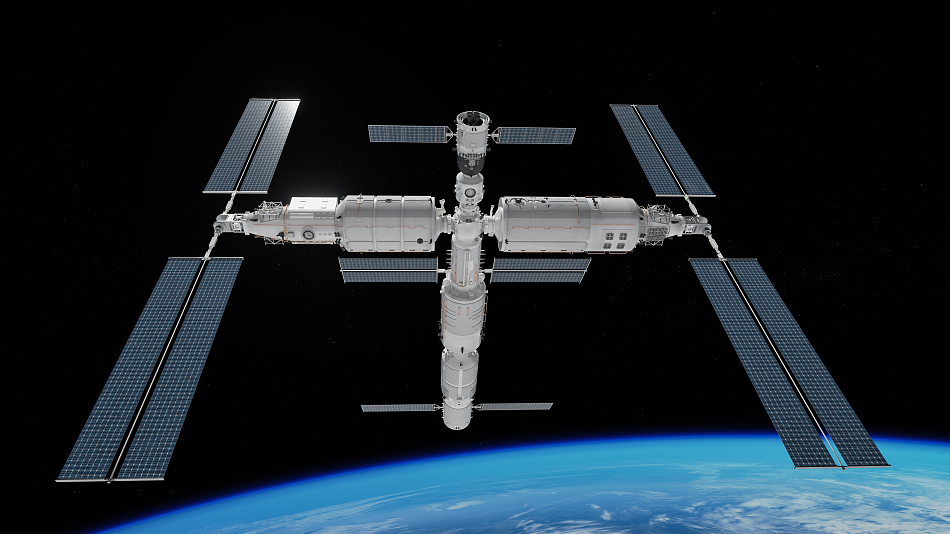
The telescope, during its normal observations, will fly independently in the same orbit as China's space station but will maintain a large distance apart. China is scheduled to complete the in-orbit construction of its space station by 2022.
Zhan said the telescope was designed, in its initial plan, to be mounted on the space station, but there would be disadvantages such as vibration, potential contamination, stray light and line-of-sight obstruction from the space station. Later, a bold design was adopted – putting the telescope in the orbit of the space station but keeping them far away from each other during normal operations and docking it with the space station when necessary.
The CSST can dock with the space station for refueling and servicing as scheduled or as needed, making its maintenance more affordable than Hubble.
The U.S. space agency NASA launched space shuttles in five servicing missions from 1993 to 2009 to perform repairs, replace parts and install new instruments for Hubble.
The CSST is expected to start scientific operations in 2024 and has a nominal mission lifetime of 10 years, which could be extended in principle.
Unraveling cosmic mysteries
The CSST will take pictures of 40 percent of the sky and transmit massive data back to the Earth that scientists all over the world can study, Li said, adding that its main objective is to address the most basic problems about the universe.
It will observe well over one billion galaxies and measure their positions, shapes and brightness which may help explain how those galaxies evolve.
"We have known that our universe is expanding with an acceleration and we can calculate its current expansion rate, but it's still unknown what causes the acceleration," said Li. "CSST observations may offer answers and unveil new physics." Read More...