Chimpanzee deaths in Uganda pinned on human cold virus
-
 Loading...
 - Mary Campbell
- 14 Dec 2020
- 1479 Views
- 0 Like
- 0 Comment
In the wild, chimpanzees face any number of dire threats, ranging from poachers to predators to deforestation.
That's why scientists, investigating an outbreak of respiratory disease in a community of wild chimpanzees in Uganda's Kibale National Park, were surprised and dismayed to discover that a human "common cold" virus known as rhinovirus C was killing healthy chimps.
"This was an explosive outbreak of severe coughing and sneezing," says Tony Goldberg, a professor in the University of Wisconsin-Madison's School of Veterinary Medicine and one of the senior authors of a report documenting the event. The report was published online today (Dec. 13, 2017) in the journal Emerging Infectious Diseases.
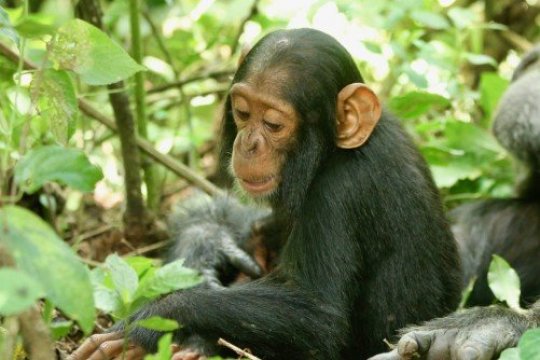
"It was completely unknown that rhinovirus C could infect anything other than humans," says Goldberg, referencing a two-year-old chimp named Betty, who succumbed to the virus and whose body was quickly recovered and autopsied after her death. "It was surprising to find it in chimpanzees, and it was equally surprising that it could kill healthy chimpanzees outright."
The outbreak occurred in February of 2013 and affected most of the chimps in the community. During that time, five chimps out of a community of 56 died, including Betty; the other animals that died were adults up to 57 years old. The findings, says Goldberg, are a cautionary tale about human interactions with wild apes. In Africa, people encounter chimpanzees and other apes when human settlements expand into ape habitats, through activities like tourism and research, and when apes leave the forests to raid crops.
Rhinovirus C is one of three rhinovirus species, each causing respiratory disease in humans. But rhinovirus C is notably more severe than its relatives, rhinoviruses A and B. Although the virus had likely been infecting people for several thousand years, it was unknown to science until 2006, when it was discovered using new DNA sequencing technologies.
In people, rhinovirus C infection can be especially severe in children, notes James Gern, another senior author of the study and a professor of allergy and immunology in the UW School of Medicine and Public Health. Gern's lab was the first to grow rhinovirus C in the laboratory where it could be studied. Gern's lab also described the receptor that the virus uses to infect cells of the respiratory system.
"In general, this virus seems to affect young children the most," says Gern, whose lab performs high-throughput viral diagnostics, processing thousands of human samples annually. Gern explains that the genetics of the receptor -- which serves like a lock-and-key mechanism that allows the virus to enter and infect a host cell -- influences who is likely to be most affected by the virus. Some people have a version of the receptor that makes them highly susceptible to the virus while others have a different version that makes them resistant. For some people (young children, in particular) rhinovirus C infection can be a precursor or complicating factor for asthma.
"Chimps seem to be genetically predisposed to have problems with this virus," Gern says. "The virus found in Betty was one that looked like it came from a human, and the level of virus in the lung was comparable to what we see in children."
The authors were also able to examine the DNA of the chimps in Uganda using fecal samples, and they looked at published chimp genomes from across Africa. Goldberg says it was sobering to see that every chimp had the receptor that makes cells exquisitely sensitive to rhinovirus C. "There's a species-wide susceptibility of chimps to this virus," says Goldberg.
Ann Palmenberg, a UW-Madison professor of biochemistry and an authority on cold viruses, says the genome of the virus obtained from Betty shows that the virus came from a human host. "We expected to see changes all over the genome, but it is not a chimp-adapted virus."
Palmenberg, also a senior author of the study, says the virulence of the virus, with about a 9 percent mortality rate, was remarkable. "That's why kids with the CDHR3 high-risk mutation are at increased risk for being hospitalized with severe respiratory illness."
Goldberg, who has worked in Uganda for years tracking viruses in animals, says outbreaks of respiratory disease in wild chimpanzees are not uncommon, but for the most part they go undiagnosed. In the few cases where causes have been identified, other viruses unrelated to rhinovirus C have been in play.
"In most cases, we don't find out what it is. We're thinking that rhinovirus C might be a major, missed cause of disease outbreaks in chimps in the wild," Goldberg notes.
Unlike other viruses known to cause respiratory disease in chimps, though, rhinovirus C is not typically found in feces and may have been overlooked in the past.
Finding rhinovirus C as the cause of the 2013 outbreak in Uganda was part good luck, says Goldberg. The opportunity to retrieve Betty's body before it decomposed or scavengers set in was critical. So, too, were Goldberg's colleagues at Harvard and the University of New Mexico, who run a long-term chimp study in Kibale and can identify all the chimps in the community. This, plus the fact that a Ugandan veterinarian was on hand with the proper tools to obtain and secure samples through a post mortem in the field, made the discovery possible, he says.