Chilean scientists find new “moai” statue on Easter Island
-
 Loading...
 - Elijah Hughes
- 05 Apr 2023
- 61 Views
- 0 Like
- 0 Comment
Chilean scientists have discovered a new “moai” statue on Rapa Nui, also known as Easter Island, in a nearly dry lakebed within the crater of a volcano and estimate that it was buried in the mud there centuries ago when the lake still had water.
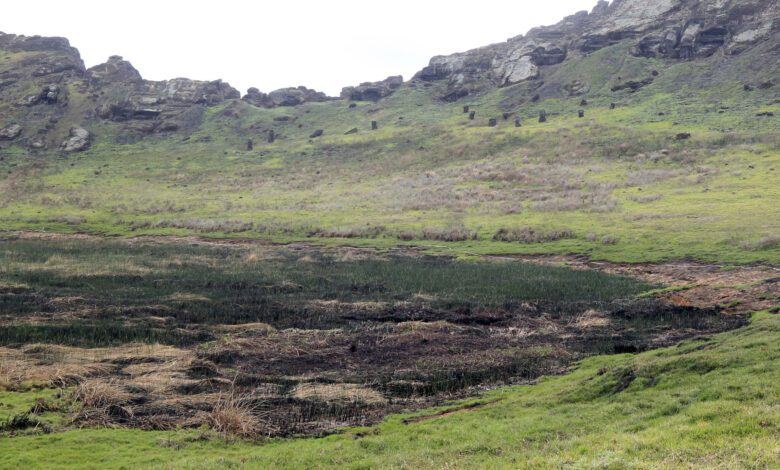
The find was made at the bottom of the Rano Raraku volcano’s crater, in the eastern part of Rapa Nui and near one of the Chilean island’s most heavily visited tourist sites.
As the vice president of the island’s indigenous Ma’u Henua people, Salvador Genua, told EFE, the moai – huge monolithic human figures carved from stone – was discovered by several student volunteers from the University of Chile and the University of Rancagua as they were doing geological research in the crater.
The students reported the find to Ma’u Henua authorities, who administer the Rapa Nui National Park.
“This new moai, according to the recollections of the wise men of our people … serves to mark the territory of the island, which was divided in two,” Genua said.
The indigenous leader said that several elderly people on the island in 1952 had seen the moai that was recently unearthed, while it was still partially buried in the lake mud, although the reports of those earlier sightings had been strictly part of the “oral tradition,”
The swampy ground in which the moai is now located – the lake having mostly dried up in recent years – was in an area that experienced a fire a few months ago that affected several nearby moais located on the interior slopes of the Raro Raraku crater.
The new moai, although it has suffered some erosion due to water, has recognizable features and depicts an entire human body.
Easter Island is known worldwide for its enormous carven stone figures representing human heads and complete bodies scattered at various points around the island, and it is still a mystery how they were transported from their original quarries to their current locations, given that each statue weighs several tons. Read More…