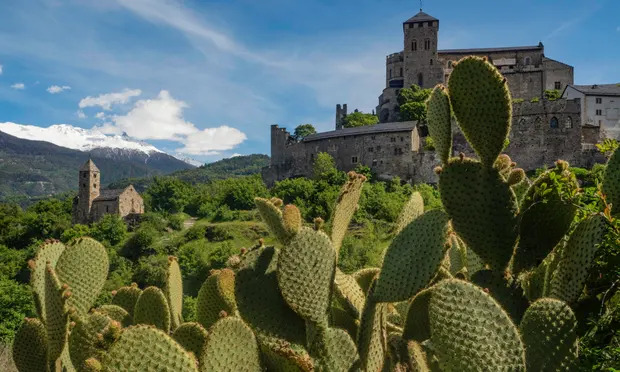
Cacti replacing snow on Swiss mountainsides due to global heating
-
 Loading...
 - Debra Martin
- 28 Mar 2023
- 144 Views
- 0 Like
- 0 Comment
Invasive species proliferating in Valais is encroaching on natural reserves and posing a biodiversity threat
The residents of the Swiss canton of Valais are used to seeing their mountainsides covered with snow in winter and edelweiss flowers in summer. But as global heating intensifies, they are increasingly finding an invasive species colonising the slopes: cacti.
Authorities say cactus species belonging to the genus Opuntia, or prickly pears, are proliferating in parts of Valais, encroaching on natural reserves and posing a biodiversity threat.
“A lover of dry and hot climates, this invasive and non-native plant is not welcome in the perimeter of prairies and dry pastures of national importance,” the municipality of Fully in the Rhone valley said in a press release announcing the uprooting campaign in late 2022.
Opuntia species and similar cacti have also proliferated in some of the hills around the capital of Valais, in Sion, where estimates suggest Opuntia plants now make up 23-30% of the low vegetation cover. Their presence has also been reported in neighbouring Alpine regions, including Ticino and Grisons in Switzerland, and the Aosta valley and Valtellina in Italy.

“In some parts of Valais, we estimate that the cacti can occupy one-third of the available surface,” says Yann Triponez, a biologist who works in the canton of Valais’ nature protection service. He says Opuntia have been present in Valais at least since the late 18th century, when it was imported from North America.
But authorities believe that a warmer climate in the Alps, allowing for longer vegetation periods, and the diminishing snow cover might be creating the ideal conditions for them to spread. Read More…