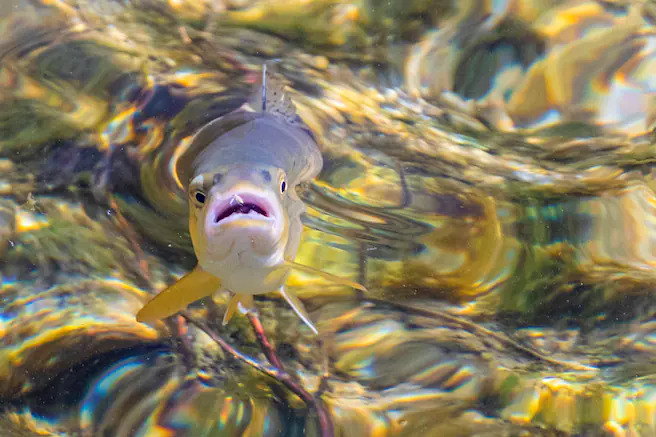
Brown trout are becoming rarer
-
 Loading...
 - robyn anna
- 05 Sep 2022
- 75 Views
- 0 Like
- 0 Comment
Thanks to water protection, water bodies are given more space and pollution is reduced. But pesticides remain a problem and climate change is affecting water bodies.
Thanks to water protection, water bodies are given more space, drains become more natural, habitats for plants and animals are networked and pollution is reduced. According to the Federal Office for the Environment, the measures taken in recent decades are having a local impact.
However, further measures are necessary to ensure that biological diversity in water bodies does not continue to decrease and that water bodies become resilient to climate change. This is what the Federal Office for the Environment (FOEN) writes in its first nationwide analysis of the state of the water bodies, published on Tuesday.
You can swim almost everywhere
Thanks to high investments in urban drainage and wastewater treatment, only a small part of the pollution from the settlement areas ends up in the lakes and rivers. Since the 1980s, the phosphorus concentrations in the lakes have therefore also decreased and it is possible to swim practically everywhere.
Since 2016, some wastewater treatment plants have been expanded with an additional cleaning stage that reduces micropollutants such as pharmaceuticals from the wastewater.
Revitalization important
Due to the Water Protection Act of 2011, streams, rivers and lakes are being revitalized. So you get more space and obstructions are removed. The negative impacts of hydropower use are reduced by mitigating artificial flow fluctuations and by equipping power plant barriers with fish passes.
Rivers, streams and lakes are also key to maintaining biodiversity. According to the report, further efforts are therefore needed to make the entire water system more natural again. Read More…