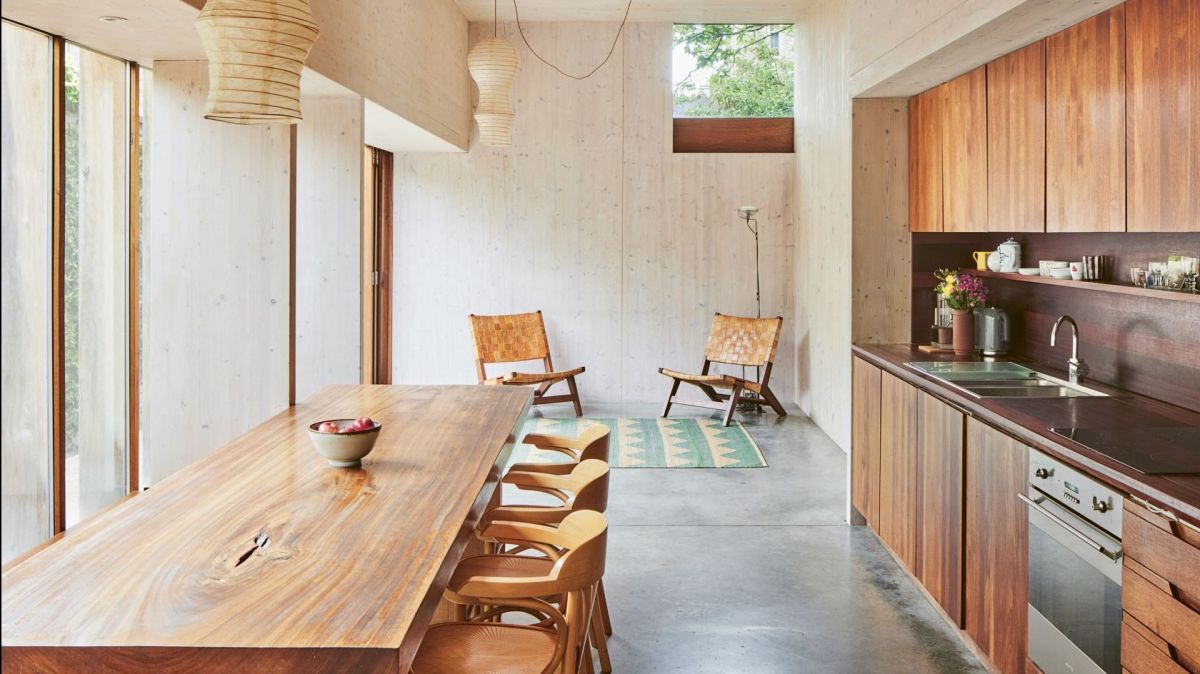
Basic design principles for creating a beautiful modern home
-
 Loading...
 - Jennifer Wood
- 09 Dec 2021
- 485 Views
- 0 Like
- 0 Comment
Having a beautiful home has never felt more important than during the past 18 months when we’ve been forced to spend more time inside our own four walls – and you may have longed to transform yours into a beautiful modern living space.
But if a lack of know-how or limited finances held you back, it’s not too late to get started. For design guru Matt Gibberd insists it can be easy to create a gorgeous home without spending a fortune, just by implementing simple design principles.
Gibberd, who is a founding director of the design-led estate agency The Modern House, has just written the book A Modern Way to Live, in which he outlines the five principles and how to best use them to create a beautiful home.
Here he gives us a taste of exactly how to do it…
Space
Gibberd explains that when a home combines both space and “refuge” areas it can help make occupants feel settled. He suggests: “Try to create an open and bright space for socialising, and a womb-like space for retreating and sleeping. Even in a studio flat, creating different zones using a curtain, sliding partition or bookcase on castors can greatly enhance the experience of occupying the space.”
You can create the illusion of space with mirrors and reflective surfaces, he says, by using natural niches for built-in cupboards, and continuing the same material from inside to out. Consider re-hanging doors the other way around to open up rooms, and place radiators beneath windows to free-up valuable wall space for furniture.
Light
Gibberd says it’s better to consider fixed glazing with a conventional door alongside, rather than bifold doors. “A picture window – free of obtrusive handles and mechanisms – does a better job of framing the views and looks more beautiful because the structural supports are hidden,” he explains.
He suggests avoiding Roman blinds and pelmets, and hanging curtains from extra-wide poles so they can be pulled back to reveal the full window. And think about how the light moves around your home. “Sitting areas benefit from the enhanced light of a south-facing window,” explains Gibberd, “whereas parts of the home that are seldom used, such as utility rooms, are best placed on the northern side. The eastern side is ideal for sleeping, and dining spaces work well on the western side, where they capture the radiant embers of the day.”
But although light is crucial for a home, Gibberd says householders shouldn’t be afraid of the dark either. “Without areas of contrast, our homes would be one-dimensional and monotonous,” he explains. “If you walk down a shadowy corridor, for example, when you arrive at a sun-soaked space it feels all the more bright and uplifting.”
Materials
Gibberd says householders should think carefully about the things they come into physical contact with every day, including light switches, door handles or kitchen worktops. “Are these as tactile as they should be?” he asks, pointing out that natural materials will always age more gracefully than man-made plastics and laminates. “Try to preserve original materials wherever possible, as they tell the individual story of a building and induce less anxiety than new ones,” he advises.
Gibberd suggests living in a home for at least a year before making any changes. “For example, that wooden floor you thought was a bit beaten-up when you moved in might start to take on some significance – its warmth beneath bare feet, or its ability to absorb the comings and goings of daily life.”
Natural materials like marble and glazed tiles have a gentle sheen and are easy to keep clean, he says, and clay is a moisture-absorbing alternative to conventional plaster. Read More…


