'Banksy vs Fake Banksy': Belgrade’s Exhibitions Stir Debate Over Street Art Commercialisation
-
 Loading...
 - Sem Visser
- 05 Mar 2025
- 34 Views
- 0 Like
- 0 Comment
Belgrade, the capital of Serbia, is renowned for its vibrant street art culture, which has recently been thrust into the spotlight due to two competing exhibitions showcasing the work of the elusive British street artist Banksy. These exhibitions have ignited a heated debate about the commercialization of street art and the accessibility of artistic expression.
The Exhibitions
One of the exhibitions, simply titled ‘Banksy,’ is organized by Slovenia’s Deva Puri Gallery and features a collection of prints and posters, including album covers, collaborations with Greenpeace, and an alternative opening for The Simpsons. Visitors have been actively sharing their experiences on social media, often posing next to a bomb model that appears in several of Banksy’s murals. The exhibition charges an entrance fee of up to 1,300 dinars (approximately Rs 1,000), and curator David Rjazancev has emphasized that the pieces on display were borrowed from private collections, galleries, and museums, with their authenticity verified.
In contrast, a rival exhibition titled ‘Fake Banksy, Real Message’ has emerged, offering free admission. Curator Nemanja Janjic has voiced strong criticism of the entrance fees associated with the ‘Banksy’ exhibition, arguing that they contradict Banksy’s anti-establishment ethos. “His art is, above all, a critique of consumerism, elitism, and profit, with a clear message that art should be accessible to everyone,” Janjic stated.
The Debate Over Commercialization
The contrasting nature of these exhibitions has sparked discussions about the commercialization of street art. While the ‘Banksy’ exhibition aims to celebrate the artist’s work through a curated experience, the ‘Fake Banksy’ exhibition seeks to challenge the notion of art as a commodity. At Janjic’s exhibition, visitors are encouraged to use a paper shredder to destroy art prints, a nod to Banksy’s infamous “Love Is in the Bin” stunt from 2018, where a painting self-destructed immediately after being sold at Sotheby’s in London. This act serves as a commentary on the commercialization of art and the often absurd nature of the art market.
Local residents have expressed their views on the matter. Vanja, a Belgrade resident, remarked, “His works are not meant for mass consumption … he is not a capitalist, nor is he commercial.” This sentiment reflects a broader concern among street art enthusiasts about the potential dilution of Banksy’s message when his work is commodified.
The Context of Street Art in Belgrade
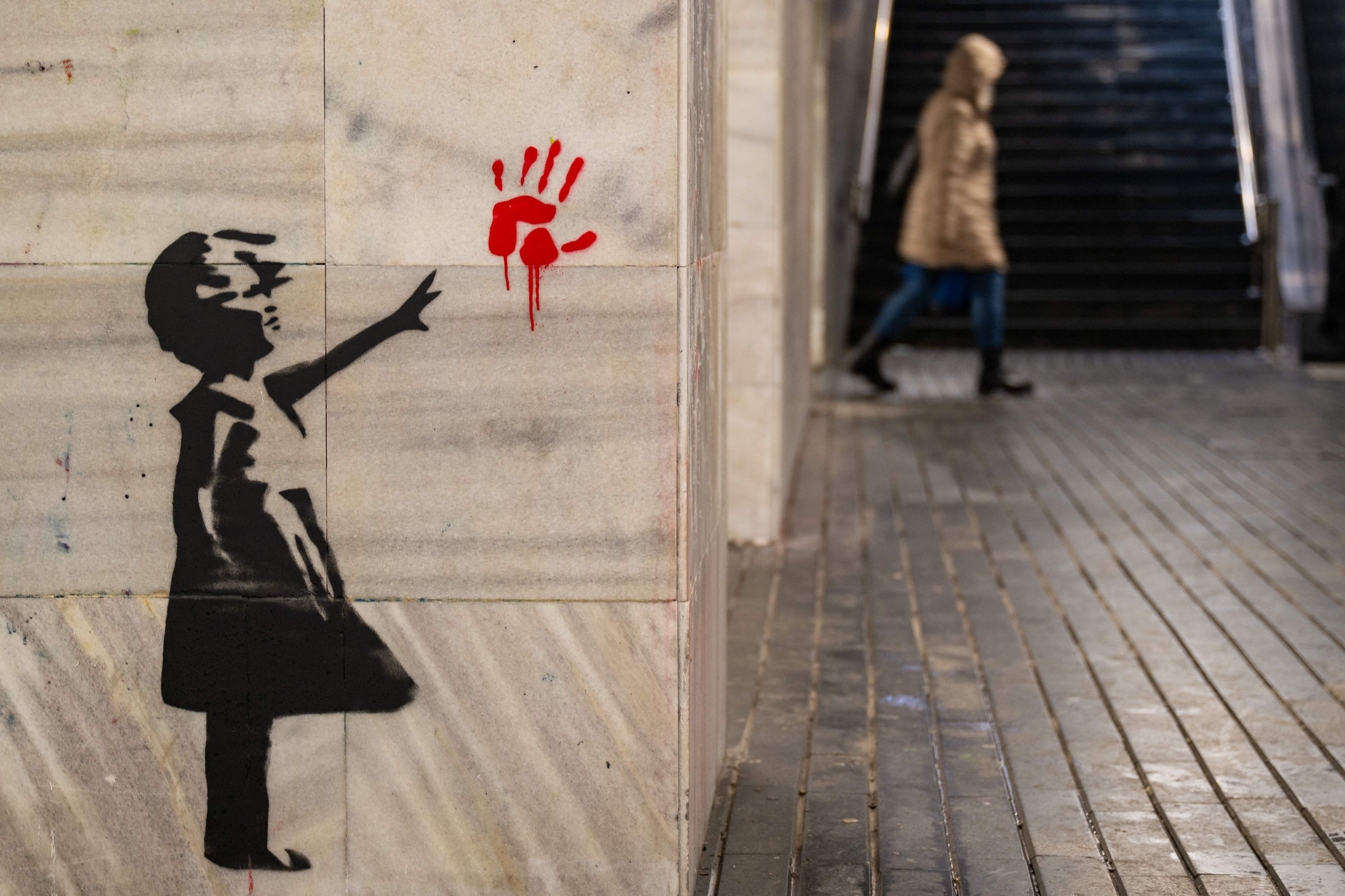
Belgrade has a rich history of street art, with its walls adorned by murals depicting various figures, including warlords, rock stars, and poets, as well as nationalist messages related to Russia and Kosovo. The city’s street art scene has also been a platform for political expression. During recent student protests, demonstrators reinterpreted Banksy’s iconic image of a girl reaching for a red balloon by adding a bloody handprint, transforming it into a symbol of the anti-corruption movement.
The exhibitions in Belgrade highlight the ongoing tension between the commercialization of art and the ideals of accessibility and anti-consumerism that street art often embodies. As the debate continues, it raises important questions about the role of art in society and the ways in which it can be both celebrated and critiqued. Whether through paid exhibitions or free public displays, the conversation surrounding Banksy’s work and its implications for street art culture remains as relevant as ever.