Balenciaga's legacy: when Spanish art met Swiss silk
-
 Loading...
 - Logan Devine
- 03 Apr 2022
- 360 Views
- 0 Like
- 0 Comment
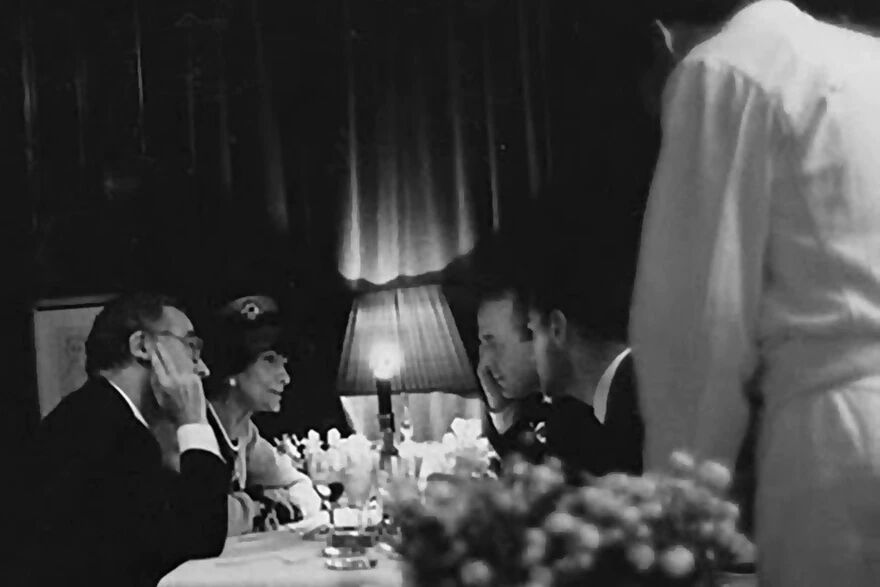
Cristóbal Balenciaga, the Spanish fashion designer who died 50 years ago, was a contemporary of some of the most influential creators in the fashion business, such as Coco Chanel and Christian Dior. His peers called him “The Master” of couture.
His most important legacy is probably the interaction of fashion and art, and his work is exhibited like art in museums, including the Cristóbal Balenciaga Museoa in Getaria, a Basque village in Spain where he was born in 1895.
The Balenciaga fashion house, founded by the designer in 1917, had a rollercoaster existence. Because of the Spanish Civil War, it moved to Paris in 1937; in 1969 Cristóbal Balenciaga decided to close shop, shortly before his death in 1972. It was reopened in 1986, under a new direction, and today belongs to the luxury group Kering. The brand, which has been under the creative direction of the Georgian Demna Gvasalia since 2015, is still associated with bold designs.
Haute couture enters the museum
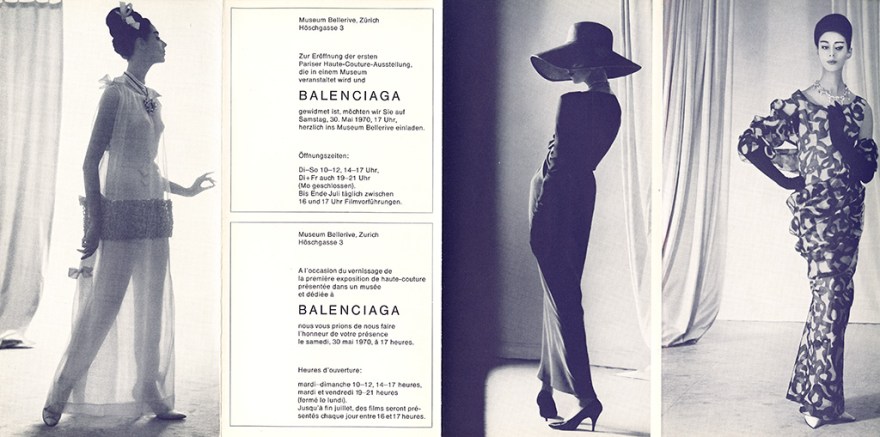
A lesser-known fact about the fashion house is its Swiss connection. It was in Switzerland that haute couture first became art, thanks to a show dedicated to the Spanish fashion designer in 1970 at the Bellerive Museum in Zurich. This was a world first and took place three years before the Metropolitan Museum’s ground-breaking exhibition The World of Balenciaga.
The Bellerive had just opened its doors in November 1968 and was looking for ways to make an impact in the cultural scene. Enter Verena Bischofberger, then director of the fashion design course at the school of applied arts in Zurich.
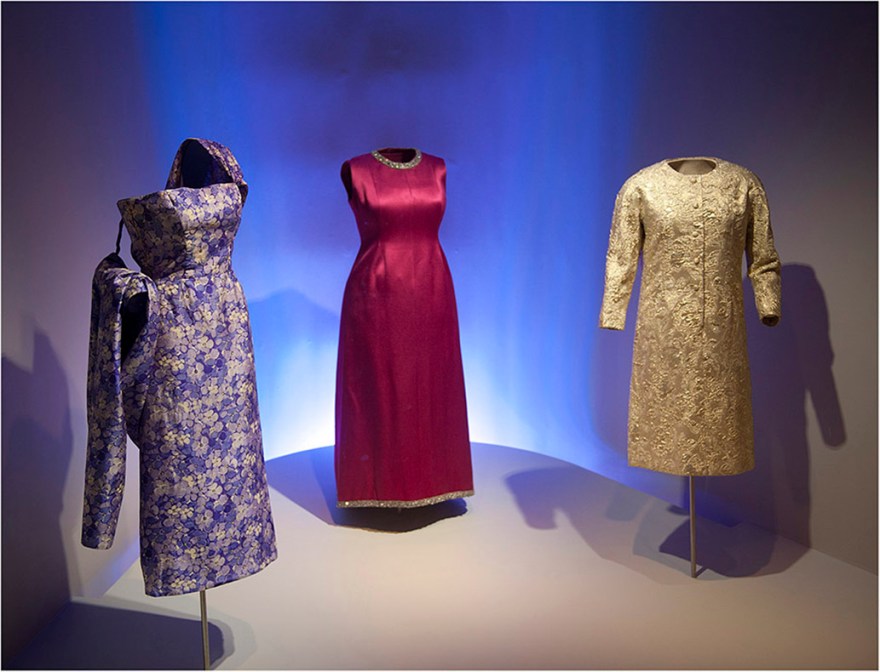
When news spread that Balenciaga wanted to close his shop and retire, Bischofberger decided to buy a series of garments from the Balenciaga fashion house and start a collection for the school.
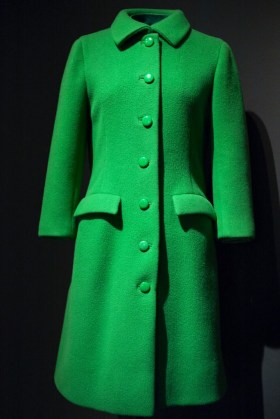
She contacted Gustav Zumsteg, who is the owner of the Abraham textile company and an art collector and close friend of the couturier. A meeting was arranged in Zurich in September 1968, followed by a trip to Balenciaga’s headquarters in Paris, where Bischofberger made her selection of garments for the Bellerive exhibition.
In May 1970, the Bellerive Museum opened the show Balenciaga: Ein Meister der Haute Couture (Balenciaga: a master of haute couture), the only art exhibition of his works organised while he was still alive. The retrospective displayed the clothes that the school had bought alongside loans from Balenciaga and two of his clients.
The Zurich show, attended by over 10,000 people, was a milestone in fashion exhibitions, and many of its pieces were later requested by the Metropolitan.
Swiss silk
The textile industry is one of Switzerland’s oldest. In the second half of the 19th century, Zurich was the second largest silk producer in the world, most famous for its black taffeta.
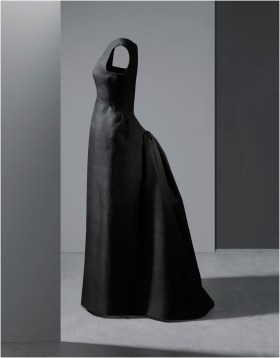
Balenciaga used Swiss silks from the Abraham Company in his designs. Abraham AG (Abraham Ltd) was founded in 1878, and in 1943, Gustav Zumsteg joined as a partner.
Under his command, Abraham AG became a constant presence in the Paris haute couture scene. At its peak in the 1960s, the company supplied fabrics to couturiers like Dior, Givenchy and Ungaro, and above all Yves Saint Laurent and Balenciaga.
In Paris, as well as circulating in the world of haute couture, Zumsteg came into contact with artists such as Matisse, Braque, Chagall and Miró, and acquired a collection of Modernist masters. Some of these artworks still decorate the walls of the famous Kronenhalle restaurant in Zurich that belonged to his mother.
The relationship between Balenciaga and the Swiss firm Abraham AG began in the 1940s, based on the search for a material that would allow Balenciaga to develop increasingly pure and abstract forms. Read More…