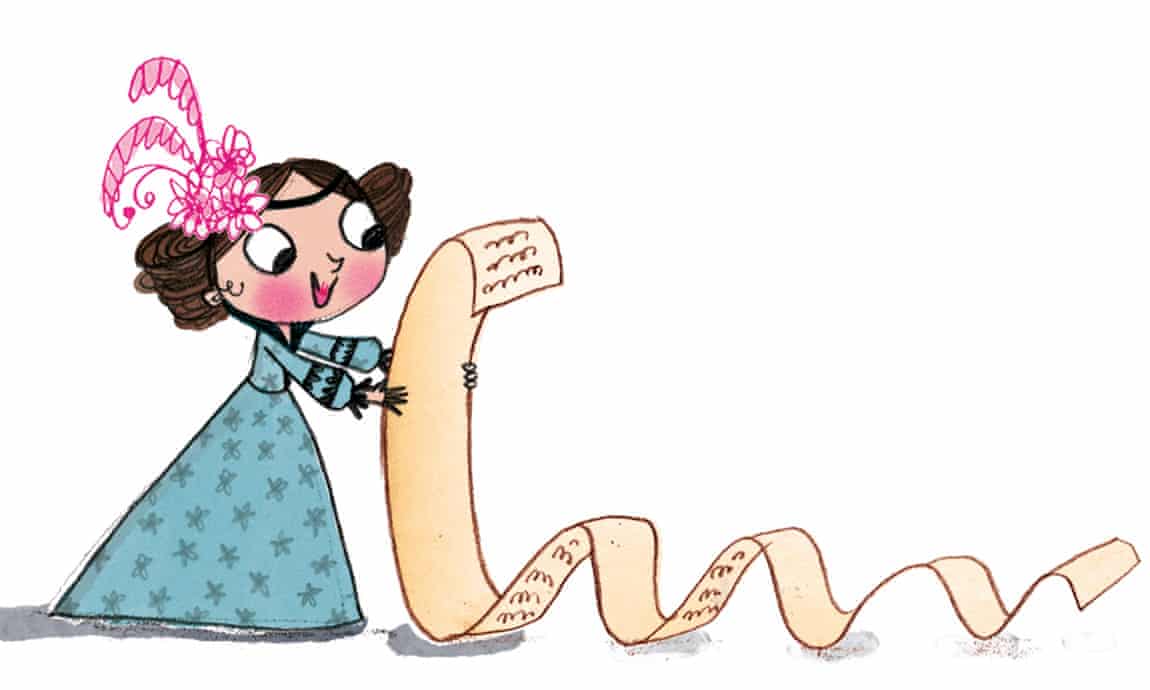
Are women in science any better off than in Ada Lovelace's day? -Jess Wade
-
 Loading...
 - Lisa Kendrick
- 10 Oct 2021
- 918 Views
- 0 Like
- 0 Comment
In recognition of the fact that their obituary pages had been dominated by white men, in 2018 the New York Times published an obituary of the Countess Ada Lovelace. Alongside Grace Hopper and Katherine Johnson, Lovelace has become an icon for women in technology. So much so that the second Tuesday in October is recognised internationally as Ada Lovelace Day. But what would a modern-day Lovelace make of the situation for women working in science today?
Lovelace was from a wealthy background; her father was the poet Lord Byron and her mother, Anne Isabella Milbanke, the “princess of parallelograms”, was a keen mathematician and social reformer. Social scientists of today would describe Lovelace as having high “science capital” – her well-connected parents meant her mentors and advisers were members of the British scientific elite, including the polymaths Mary Somerville and Charles Babbage. Her extraordinary insight was the product of an interdisciplinary and inspiring education from world-renowned experts, and she would have been appalled at how modern Britain has rejected expert advice. Her childhood allowed her to recognise the poetry in mathematics and the beauty of computation. The poetical scientific learning of Lovelace gave her immense clarity and forward thought. She might have been surprised to find out that 170 years later, the government has cut funding to arts education to such an extent that it is the preserve of the elite. I’m pretty sure that she wouldn’t be happy that we force young people to specialise in one subject at the age of 18.
At the age of 19, Lovelace married a lord and had three children, but decided to return to mathematics in 1839. Her mathematics education occurred via correspondence with Augustus De Morgan – the first professor of mathematics at University College London. She might be shocked to learn that, in 2018, 20% of school students are taught maths by someone without an A-level in maths. She would be incensed that only 30% of A-level further maths students in the UK and 22% of A-level physics students in England are young women. She would be horrified that fewer than 1% of girls study computer science A-level in the UK. Her success was largely thanks to her being able to return to mathematics after “maternity leave”, so I expect she would have been a supporter of the Daphne Jackson fellowships, a flexible returnship scheme that allows scientists who have taken time out of research to retrain in a new discipline.
There are plenty of things Lovelace would have liked about the 21st century – instead of waiting six days for letters to arrive, she’d have access to email, and I think she’d have been a big fan of auto-translate, debugging and the NHS – but she would have been frustrated too. She would have been amazed to have had to wait 100 years for universities to allow women to graduate – which didn’t happen until the middle of the 20th century – and horrified to hear about the sexism and structural biases that women in academia still face. She’d have been disappointed to realise it took 100 years for women to get access to the library at the Royal Society. As a young researcher who was fascinated by learning and access to information, Lovelace would have been a fan of Wikipedia, but, given the number of impressive women in her life, appalled to find out that 83% of the encyclopaedia’s biographies were about men. As a mathematician, Lovelace may have celebrated the 2014 victory of Maryam Mirzakhani, the only woman ever to win the prestigious Fields Medal, but also questioned why it took more than 60 awards for a woman’s work to be acknowledged. It may have astounded her that it would take 170 years for the work of women to be recognised in both the chemistry and physics Nobel prizes, with the 2018 committee honouring the work of Donna Strickland and Frances Arnold.
We can all make efforts to make sure there are more people like Lovelace. We can get better at encouraging interdisciplinary learning and the importance of creative and technical skills. We can work harder to involve parents and teachers in conversations about stereotyping and bias, as their influence has a profound impact on young people’s self-concept, as Lovelace’s mother’s did on her. We can work hard to celebrate the brilliant science teachers we do have, and champion the Institute of Physics for its important research into gender balance. Irrespective of their age, scientists benefit from impartial, gender-neutral careers advice, mentoring and sponsorship – if you’re in a position to do this, reach out and change someone’s life. We can all get better at celebrating scientists from diverse backgrounds, ensuring our leadership and award-winners reflect the community we want to see, not the one that is currently in charge. October is Black History Month in the UK, which is a good time to remember that improving diversity is not just about getting more women in science – everyone should be able to contribute to our understanding of the world. Then who knows whose day we might be celebrating in another hundred years.