All About Bears in Norway
-
 Loading...
 - Joanna Bailey
- 10 Mar 2022
- 410 Views
- 0 Like
- 0 Comment
The population of Scandinavian and Finnish Brown Bears has been recovering of late, but very few live in Norway.
Bears will always be associated with the North. Words like Arctic, refer to the North by its association with Ursa Major and Ursa Minor.
The two bear constellations appear in the North of the sky. So, Arctic effectively means ‘where the bears are’ and Antarctic means ‘where the bears are not’!
Bears in northern Europe
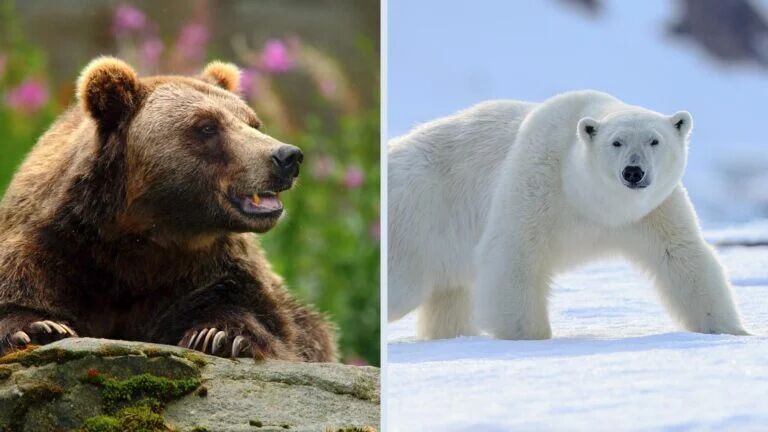
While bears come in many different types, the bears of Norway are of the Eurasian Brown Bear subspecies, ursus arctos arctos. This is a very close cousin of the Grizzly Bears in North America.
In terms of size, the Brown Bear is the second largest species of bear after the Polar Bear.
It’s not too long ago that these bears roamed all across the northern hemisphere. Overhunting led to them becoming extinct in many countries such as Britain, France and Denmark. In other countries, numbers were vastly reduced but they managed to retain enough to keep a self-sustaining population.
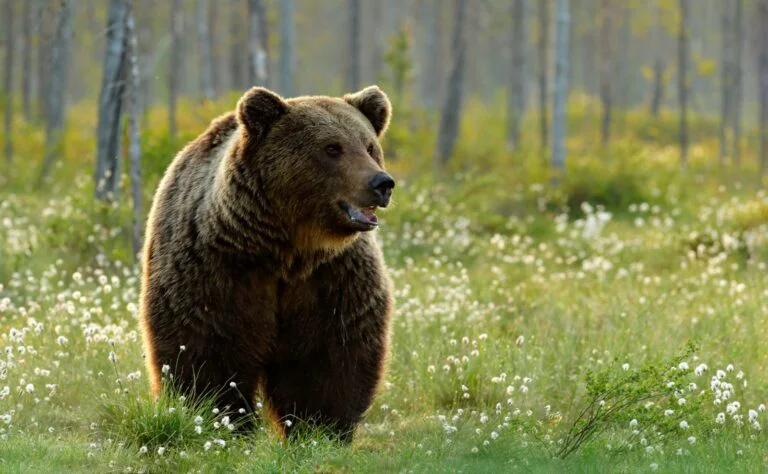
Around the world, there are around 110,000 brown bears, according to the WWF. Close to half of these live in Russia and a quarter live in the Americas.
In 2010, there were approximately 14,000 brown bears living in Europe, spread out in 10 separate populations throughout the continent. This ranges from a handful in the Pyrenees to a few thousand in Romania.
How many Brown bears live in Norway?
Norway is one of the countries where the brown bears are definitely endangered. While bears were extinct in Britain no later than 1000 CE, Bears were still fairly prolific through all of Scandinavia until the start of the 20th century.
Even as recently as the 19th century, bears were still being hunted in large numbers in Norway. It was political will at the time that bears should be exterminated. The government paid bounties for killing bears until the turn of the 20th century.
With 2-300 bears being killed each year this led them to the brink of extinction. The political mood changed and the bounties stopped but from around 5000 in the middle of the 1800s, only 130 were left in the whole of Scandinavia.
Since then, scientists have been trying conservation efforts to restore numbers. These have met with the greatest success in Sweden and Finland but less so in Norway. By the mid 1990s, there were around 1000 bears living in Sweden but still only around 30 living in Norway.
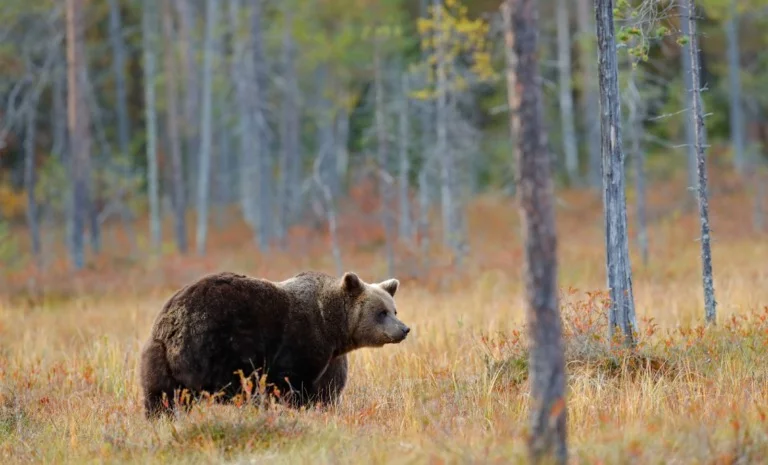
A nationwide bear surveillance project has been operating since 2009. It reports annually on the numbers of bears found and the numbers of litters that have been born. The good news is that these conservation efforts have finally started to show success.
It's important to note that these are not necessarily exact totals. The survey analyses populations from DNA samples collected in the wild. So, they know how many individuals are involved in the samples but there may be others.
In 2020, 150 brown bears were detected by the survey. This included 65 females and 85 males. This was an increase of 2 from 2019, which itself was an increase in 10 from 2018. The numbers increase every year, but experts aren’t congratulating themselves too much just yet.
Brown bears in nature
Brown bears are, by their nature, fairly shy creatures. They are not aggressive by nature and will stay away from humans and keep to themselves where possible. The females tend to stay within small geographical areas, but the males will roam over much wider distances.
Bears are not particularly dangerous to man and won’t be, so long as their numbers remain relatively low. The biggest threat to man comes when man encroaches on the bears’ territory. This is why bear attacks, while still uncommon, are much more common in North America.
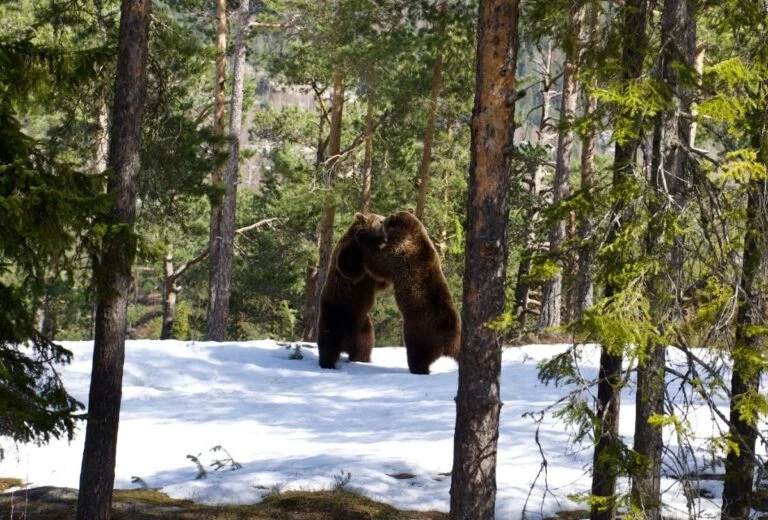
There are a lot more bears, a lot more people, and more people living close to bears in the US and Canada. In North America, around 2 people are killed by bears each year, which is still pretty good odds. In Scandinavia there have only been 3 fatal bear attacks in the past century!
Bears are omnivores and will eat meat as well as plants. Back when they roamed the earth more freely, meat would have been around 80% of their diet but as their habitats have declined, this is down to around 10%.
Nowadays their primary diet consists of nuts and berries. These are the nutrient rich and calorie-dense foods that allow them to build up their stocks for hibernation. But still…if you show a bear a sheep, you will end up with a fed bear and a dead sheep! Read More…