Algeria's Ban on Research Ties with Morocco Violates Academic Freedom, Scholars Say
-
 Loading...
 - Divya Mehta
- 08 Aug 2022
- 84 Views
- 0 Like
- 0 Comment
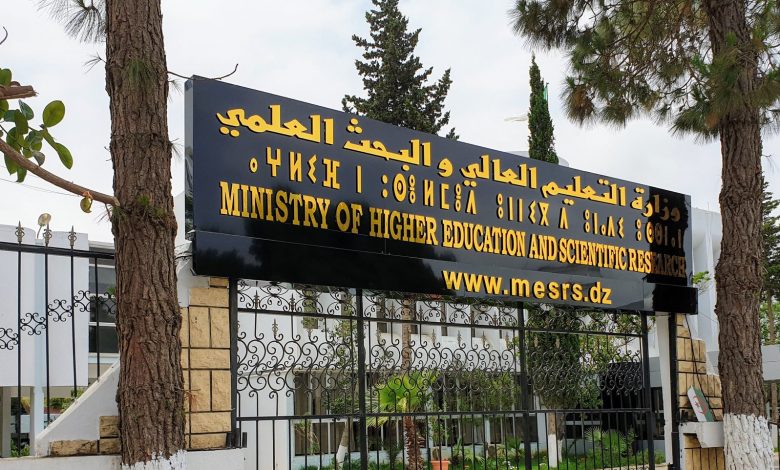
Academics in Algeria and Morocco say the Algerian Ministry of Higher Education and Scientific Research’s decision this month to ban Algerian scholars from attending conferences in Morocco or publishing research in Moroccan journals is an affront to academic freedom.
But the decision will have little impact on knowledge production, they say, because research collaborations between the two North African countries were already limited.
Algerian-Moroccan relations have been tense for decades, over the issue of Western Sahara in particular. Morocco claims sovereignty over the territory, but Algeria and many other African countries support the Polisario Front, a movement seeking to establish an independent republic in Western Sahara. This tension escalated to the point that Algeria severed diplomatic ties with Morocco last year.
In justifying its decision to ban academic contacts, Algeria’s Ministry of Higher Education cited the publication of “anti-Algerian articles” in the Moroccan journal Al-Bahit, which publishes legal and judicial studies. The ministry called on Algerian scholars to immediately withdraw from the journal, accusing it of defending “Moroccan narratives about Western Sahara” in its articles.
Al-Bahit has an academic committee of scholars from several Arab countries, including eleven from Algeria.
Collaboration Was Already Limited
The Algerian Ministry of Higher Education accused a Moroccan legal research journal of publishing “anti-Algerian articles” and called on Algerian scholars to immediately withdraw from the journal.
Prior to the ministry’s decision, research cooperation between the two countries was already limited. Faculty members from the two countries might collaborate in seminars or on research projects, but only at the individual level, academics from both countries said.
In a phone call, Morsli Leraje, an advisor to Algeria’s Minister of Higher Education, declined to comment on the background of the decision. He only said that the ministry’s statement clarified all details related to the matter.
Another Algerian academic who previously served as an advisor to the Ministry of Higher Education said the decision was related to “the political crisis between the two countries, which has manifested on several levels, including academia.”
The former academic official, who asked to remain anonymous, told Al-Fanar Media that conferences, seminars, and research centres in Morocco “have become directed to serve an agenda and narratives that Algeria sees as hostile, especially in the political, economic and social fields.”
He thinks that the decision, in most cases, will not include imposing subsequent sanctions on academics who work on research papers with Moroccan counterparts. “It is a message and reaction to the publication of some hostile Moroccan papers against Algeria,” he said.
Noureddine Bekis, a professor of political sociology at the University of Algiers 3, agreed that the decision would not affect knowledge production in light of the limited academic collaboration between Algerian and Moroccan universities. He noted that the visits of Algerian academics to Morocco were more like “touristic academic visits.”
Bekis told Al-Fanar Media that there had been no institutional cooperation for years. There was academic and personal communication among scholars, he said, but this “did not result in significant knowledge or research production. Usually, academics are the weakest point when a political dispute arises.”
Concerns About Academic Freedom
The ban “offends Algerian researchers and makes them appear as if they are weak and easily manipulated to serve Morocco’s agenda.”
On the other hand, Abdelkader Lachkar, a member of the National Council of the Moroccan Syndicate of Higher Education and Scientific Research, believes that the decision “abolishes academic freedom, a fundamental component of scientific research.”
In a phone call, he told Al-Fanar Media that the ban “offends Algerian researchers and makes them appear as if they are weak and easily manipulated to serve Morocco’s agenda.”
Lachkar, a professor of public law and political science in the Polidisciplinary Faculty of Taza at the University of Sidi Mohamed Ben Abdellah, in Fez, added that some Moroccan scholars may reciprocate by resigning from membership of Algerian journals or declining to participate in seminars, if the ban is generalised to all academic journals and activities.
Mohammed Darouiche, head of the National Observatory of Education and Training in Morocco, said that the decision was a violation of academic freedom, which he described as “a basic condition for scientific research.” Read More...