Algeria's Amazigh Problem: Escalation of the Kabylia Conflict
-
 Loading...
 - Fatima Salhi
- 23 Mar 2022
- 396 Views
- 0 Like
- 0 Comment
**This is the first of a two-part series covering the Kabyle-Algerian conflict. The second part will address the exiled Kabyle government’s specific claims of genocide against the state of Algeria and the petitions it has filed with two courts.
~~~
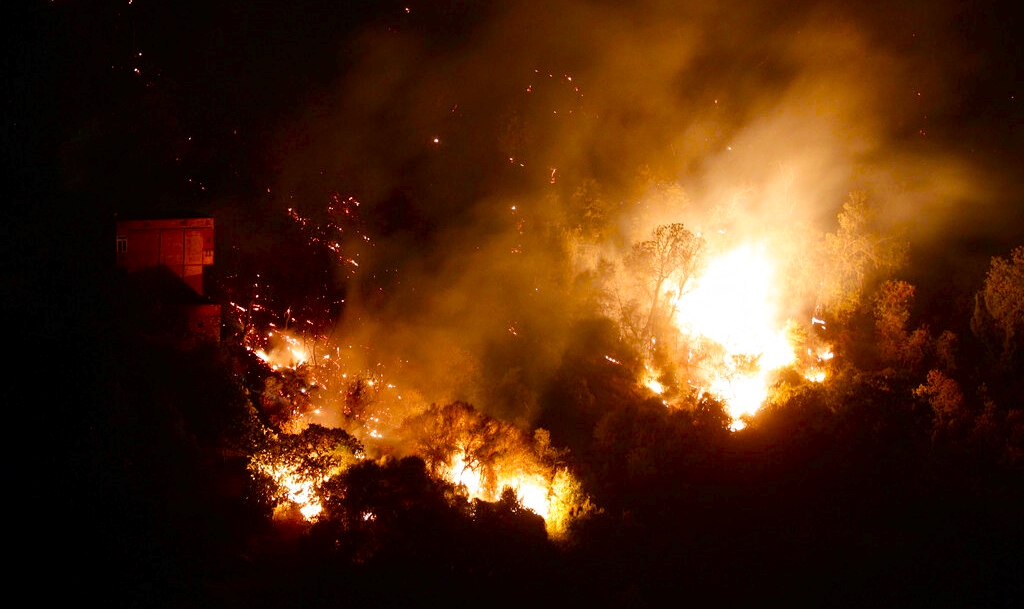
While forest fires occur almost every year in Algeria in the north-eastern region of Tizi Ouzou in the Kabylia region, last August they ravaged the once verdant region, destroying hundreds of thousands of acres, incinerating thousands of homes, and killing at least 90 people. The disaster caused finger-pointing and cross-allegations by the recently-installed Algerian government – which has little popular support – and the exiled government of Kabylia – which represents the Amazigh (Berber) population known as Kabyles.
The present situation – one that receives little if any coverage in the media – is the culmination of events going back decades to Algeria’s independence from France in the 1960s and the emergence of the Kabyle independence movement.
Kabylia’s Independence and Hirak Movements
President Abdelmajid Tebboune is the successor to the 20-year-long reign of corruption of former president Abdelaziz Bouteflika, who died on September 17, 2021 at the age of 84. Bouteflika had been in failing health since 2013, and his term ended in disgrace in 2019. His long-awaited retirement was precipitated by massive popular protests by the pro-democracy Hirak movement that year.
Originating in the Kabylia region, the Hirak has sought to overhaul Algeria’s entire ruling system, which has been in place since the North African country’s independence from France in 1962. Although often compared to the Arab springs that began with Tunisia in 2011, Hirak’s Algerian “spring” did not turn into summer, and Tebboune took office on December 19, 2019. He won with 58 percent of the vote from an election with less than 40 percent voter turnout.
Almost three months later, in March 2020, Tebboune prohibited all “marches and rallies, whatever their motives,” ostensibly to protect people from the Covid-19 pandemic. But many viewed that as a pretext that has conveniently served the purpose of curtailing all free speech, assembly, and opposition to the regime.
In March 2020, Tebboune prohibited all “marches and rallies, whatever their motives.”
Nevertheless, the protests of the Hirak movement returned to the streets in February 2021, and continued throughout the year despite hundreds being arrested, including a 14-year-old girl who was detained in December and then referred for trial for “attending an ‘unarmed gathering.’”
Human Rights Watch (HRW) issued its 2021 World Report documenting a litany of human rights violations in 2020 by the Algerian state against journalists, doctors, and women.
The Kabyle independence movement (not mentioned in the HRW report) has been championing the independence aspirations of the Kabyle people since the 1980s. The Kabyles are Algeria’s largest homogeneous cultural-linguistic-ethnic Amazigh community. They are estimated to constitute around 40 percent of the Algerian population, although exact numbers are disputed. Their homeland, Kabylia, is the mountainous region of northern Algeria, just 100 kilometers to the east of the country’s capital, Algiers, which extends along the Mediterranean coast.
The Kabyles have been perhaps the most vocal of the indigenous Amazigh people of North Africa (from Morocco to Egypt) to oppose the “Arabization” of their homeland and culture. While other countries such as Morocco have taken action to recognize the rights and acknowledge the cultural renaissance of their indigenous Amazigh population, Algerian regimes have seen this as a challenge to their legitimacy. It was only in 2002 that the Kabyle language (a dialect of Tamazight) was made a “national language” under the Algerian Constitution. However, it did not become an “official” language, on a par with Arabic, until 2016.
Algerian Government Cracks Down with Arrests and Disappearances
In May 2021, the Algerian government declared Le Mouvement pour l’Autodétermination de la Kabylie (MAK) a terrorist organization and issued an international arrest warrant for the President of the Kabyle Provisional Government-in-exile, Ferhat Mehenni, who is living in Paris.
The Algerian government accused the Kabyle independence movement of deliberately starting the fires.
A few months later, in August 2021, while offering no evidence to support the claim, the Algerian government accused the Kabyle independence movement of deliberately starting the fires. It then launched a new wave of arrests and detentions, including 27 alleged members of MAK after an attack in two northern towns.
The Algerian police abducted, disappeared, and detained activist Kamira Naït Sid, the Co-Chair of the World Amazigh Congress, an international NGO that defends the rights of the Amazigh people. Her family learned days later that she had been arrested on or about August 28.
On September 12, police officers in Tizi Ouzou arrested Mohamed Mouloudj, a reporter for the local independent newspaper Liberté, and raided his home, according to a statement by his employer and news reports. Two days later, a court in Algiers charged him with spreading false news, harming national unity, and belonging to a terrorist group. Since then, he has been detained, pending investigation.
[Algerian Hirak Makes Comeback Despite Government Maneuvers]
MAK Counters Algiers “Propaganda Machine”
In response to the Algerian government’s allegations, Mehenni convened two press conferences, on August 31 and September 24, 2021 in Paris. At the first, he claimed the Algerian government was engaging in attempted genocide by burning large swaths of his people’s homeland of Kabylia. He also condemned the Algerian government for having caused the fires as a means of squelching the independence movement.
He recited a long litany of accusations, including:
“I accuse the Algerian President Abdelmadjid Tebboune of threatening my life.
I accuse the Algerian regime of torture and crimes against humanity.
I accuse the government and military of burning Kabylia and refusing to put the fire out and blocking international aid.”
“I accuse the Algerian regime of torture and crimes against humanity.”
He accused “Algeria of lying about all these things,” and the government’s strategy to “demonize the Kabyle people” and “influence international public opinion to think that the MAK was behind the fires.”
Mehenni also condemned the brutal lynching and burning of the body of 37-year-old Djamel Ben Ismail, a young activist who had gone to the Kabylia region to help extinguish the fires. The savage murder occurred in the presence of the police who did next to nothing to stop the onslaught. Mehenni said the assassination was videoed on mobile phones and circulated on social media and was so awful it “can never be unseen.”
“I feel moved in my flesh and in my soul by the Algerian propaganda machine,” he concluded. In respect to his arrest warrant, Mehenni said, “I hope that France will refuse to extradite an innocent man.”
Arrest of Kamira Naït Sid, World Amazigh Congress Co-Chair
When asked by Inside Arabia at the press conference about what had happened to Kamira Naït Sid, and whether reports of her being tortured were true, Mehenni said that she had been kidnapped “without witnesses and without any legal due process.” He said, it had been “almost a week, and we still do not have an account of the charges against the woman who is president of an NGO…For the moment there is total opacity on her fate and on the PDA charges.” He added, “lawyers will have to meet with her to find out if she has been tortured.”
Human rights organization Front Line Defenders (FLD) later confirmed that Naït Sid had been abducted by Algerian security forces from her home in Draa-Ben-Khedda, near Tizi Ouzou. She had been reported missing by her family for eight days before the security services finally confirmed that she was in police custody in Algiers.
Naït Sid had been abducted by Algerian security forces from her home in Draa-Ben-Khedda.
Naït Sid was brought before an investigation judge at Sidi M’hamed Court in Algiers on eight charges including “undermining national unity and state security” and “belonging to a terrorist organization” on September 1. She could be facing ten years to life imprisonment and/or the death penalty.
Her sister, women’s right defender Zina Naït Sid, was also arrested by security forces without a warrant on August 29, 2021 but was released the following day without having been charged.
FLD posted on its website that Naït Sid is “being targeted for her legitimate and peaceful work in defense of human rights.”
The Paris-based Association des Populations des Montagnes du Monde (APMM) [Association of World Mountain Populations] issued a statement on November 27, saying that the terrorism accusation against Naït Sid is “utterly far-fetched and not based on any credible factual element.” It asserted that she is being arbitrarily detained “in violation of international standards,” and it strongly denounced her “wrongful incarceration.”
The terrorism accusation against Naït Sid is “utterly far-fetched and not based on any credible factual element.”
Lounès Belkacem, the Secretary General of CMA, told Inside Arabia that in terrorism cases, Algerian law allows for “provisional detention for four months, renewable five times, but it is up to the judge to decide whether or not to extend the provisional detention.” He added that for purposes of the UN and the African Commission on Human Rights, Nait Sid’s status is that of “a prisoner in arbitrary detention.”
Inside Arabia reached one of her lawyers, Maître Allik, who confirmed she has been in pre-trial detention for over four months, without having been heard by the investigating judge so far. The main charge against her, he said, is of “belonging to a terrorist organization,” although she “does not share the ideas of MAK.” Read More...