Abaana ba Kintu Installation

Why would an art installation be mounted in a science laboratory? The question is as much intriguing as full of suspense not only to the outsider but also to regular art connoisseur. In fact one can be tempted to conclude it was an alternative to the absence of space to exhibit the exploratory body of work. But in between this surprising aspect of the exhibition, is the strength and answer to the novel encounter. The Installation Abaana ba Kintu by artist Sheila Nakitende is about experimentation and representation. It examines and explores bark cloth as a traditional material used in Buganda which is the artist’s ancestral home. The Installation therefore is an opportunity to interrogate her cultural identity as a Buganda native (Muganda), but also break barriers of cultural stereotype. Traditionally, in Buganda women were barred from the act of crafting bark cloth (Okukomaga).
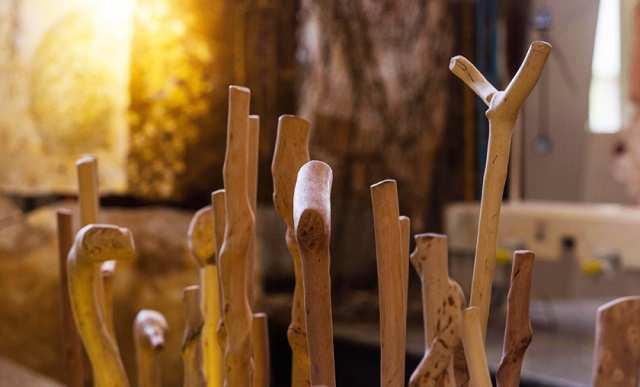
Through the process of subverting cultural norms and practices, the artist also challenges the distinctions traditionally placed between art and science. Its upon this premise that the exhibition finds itself in the Chemistry laboratory. Inside the science laboratory, the artist has mounted the now transformed bark cloth against the background of wide raging scientific tools like wash basins, lab stands, and rubber tubings with scientists in pristine white overcoats visibily seen pacing up and about the sidelines of the space. Yet beneath this sharp contrast is the mutual relationship between the two disciplines. The technique of achieving the new identity of bark cloth partly required the use of scientific methods which were applied on the organic fabric. More so, the transformative process was a creative undertaking involving research, experimentation and analysis or verification that are familiar in a science space. But within this framework of synergies, the artist was conscious enough to preserve the traditional practice of producing backcloth that is often done with the mallet and mortar. This was critical to create a marriage between the traditional and contemporary within such a setting.

The dynamism of the exhibition may not only be centered on processes of art making and breaking barriers that one may easily appreciate as soon as they begin to internalize the work on display. Similarly, the installation also delicately interrogates the subject of self discovery. Nakitende is offered a once in a lifetime opportunity to reach beneath her soul and overcome her inhibitions. During her presentation in the panel discussion that ensued the private viewing of the show, the artist spoke of her “fear of the chemistry subject and laboratory in high school”. She revealed that working on this body of work made her feel that “she had finally made it”. Such a feeling of confidence is a representation of being at peace with oneself that can translate into renewed vigour and excitement in art production. It should be noted here that Nakitende has been making art for more than a decade now. However, with this particular experience she seems to acknowledge that she is on the path of fully evolving into the artist she has always wanted to be. Read More...