37 Different Types of Bread Around The World 2022
-
 Loading...
 - Logan Carter
- 09 Mar 2022
- 409 Views
- 0 Like
- 0 Comment
According to history records, the initial bread appeared in approximately 8,000 BC in the Middle East, particularly in Egypt. And bread can be seen as the first form of human societies in the past.
Plus, the story behind bread, especially different bread types, is so interesting to explore. That’s why I am here, to show you 37 famous types of bread around the world. In this post, I also divide them into 5 different groups to make it easier to tell the difference between them.
Wait no longer! Let’s dig into the world of bread with me!
Flatbread – The Easiest Recognisable Type Of Bread
Flatbread is simply a kind of bread with a flat appearance and in different sizes. Most flatbreads are made from unleavened dough. There are also various ways to prepare flatbreads like baking, grilling, frying, or some can be enjoyed fresh.
In this part, I will cover 9 well-loved flatbreads in many places worldwide. They all have distinctive characteristics. And the following table will show you some main information about them.
1. Pita
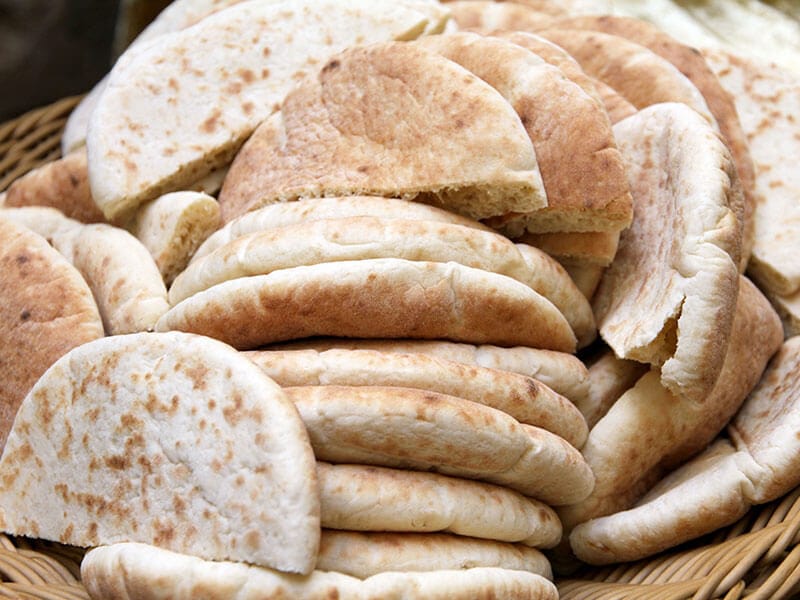
The exact root of Pita is still in doubt, but many people believe that they were from the Middle East. Though many flatbreads are unleavened, pita is the exception. They are yeast-leavened bread made from wheat flour, water, and salt.
Nowadays, Pita is a staple food in the Middle East, Mediterranean, and the neighbors. So why are they called Pita? This name might derive from the term “πίτα”, which means cake or bread in Modern Greek.
There are many variations of pita with several styles, but most pita bread is baked from 450 to 475 degrees F to be hot enough to heat the water in pita dough and create steam. That is a reason pita usually has an open form like a pocket.
The versatility of this bread in culinary is wide as well. They are an indispensable part of Middle Eastern meals as they can go well with sauces, dips, or as a sandwich to wrap kebabs or falafel.
Check this demonstration to learn to make pita bread with ease.
2. Chapati
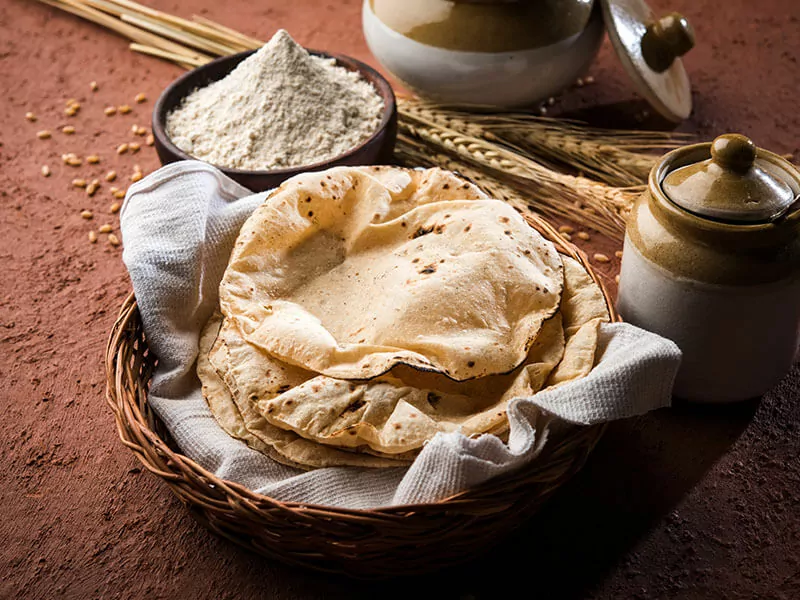
Caption: The word “chapat” in Chapati bread indicates the way people “slap” to form the shape of this bread.
Let’s move to India to find out their special bread – Chapati. These are the unleavened flatbread that you can easily find in Nepal, Sri Lanka, Bangladesh, East Africa, Pakistan, the Caribbean, and Arabian Peninsula, let alone India.
Plus, Chapati is one of the most popular side dishes in India, and they can accompany various types of recipes.
In Hindi, the term “chapat” means “slap”, referring to the way people use their wet hands to slap the dough. Chapati’s components are very simple, including whole-wheat flour (atta) and water. The locals also add salt or oil into the dough mixture, then cook them on a flat skillet (tava) and open-flame.
To prepare this bread, the dough requires a minimum of 10 minutes to 1 hour to proof so it can be softer. Chapati’s sizes and thicknesses are different in various regions, but they are not bigger than 7-inch in diameter.
3. Roti Canai
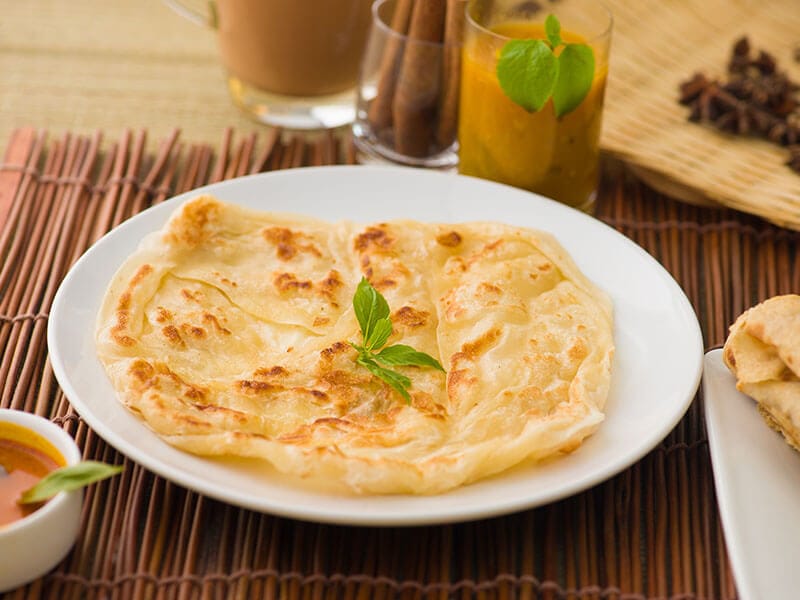
Roti Canai is a well-known Malaysian street food that the natives usually enjoy on breakfast (or as a snack). Indeed, Malaysian cuisine is strongly affected by South Indian cuisine, and Roti Canai is an obvious example.
Besides Malaysia, this is also a popular bread in neighboring countries, like Singapore, Indonesia, Thailand, and Brunei. And the first appearance of Roti Canai can be traced back to the 19th century when the Indian Muslims brought it to Malaysia.
Generally, Roti Canai consists of flour, fat (normally ghee), and water to make the dough. Then people will knead, flat, oil, and fold the bread prior to proofing them so they can create more layers. After that, they will flatten the dough ball again.
Some Roti Canai versions come with fillings like eggs and onions. But in Malaysia, Roti Canai is mostly served plain to pair well with curry.
Bring some Malaysian street food vibes to your kitchen with the homemade Roti Canai!
4. Tortilla
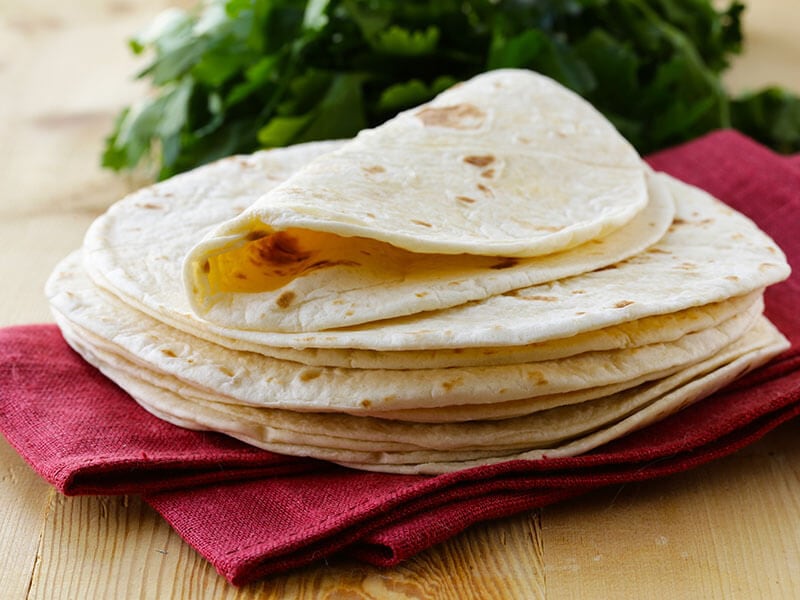
Tortilla is my favorite round-shaped flatbread. This thin bread is a Mexican specialty formed by finely ground maize dough (aka masa harina). Moreover, the natives use it to scoop many flavorful Mexican foods like stews or sauces.
Some tortillas include wheat flour, particularly in the northern region of Mexico. In this version, the natives add fats (like lard or oil), salt, baking powder, etc., to their recipes. And they use a flat Mexican-style griddle for cooking it.
Plus, there are various ways to enjoy tortillas. They can work in the manner of sandwiches in tacos or as a wrapper for enchiladas treats. If you want to enjoy them for a Mexican-based breakfast, fry some eggs and tortillas and serve them along with some slices of avocado.
5. Naan
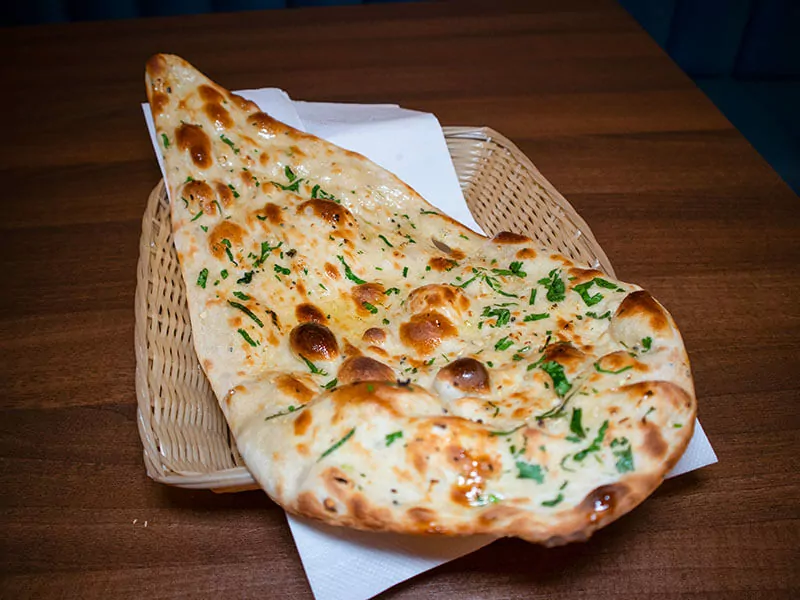
Like Pita, Naan is a leavened flatbread, but they are usually softer than Pita. The first form of “naan” in English was the term “nÄn” in Persian, meaning bread. Their popularity has spread to India, Western and Central Asia, Myanmar, Indonesia, and the Caribbean.
Of course, Naan has different styles, ingredients, or cooking techniques from region to region. Like in the Indian Subcontinent, Naan can be leavened or unleavened version, and the locals can use milk in place of water.
A normal naan will need some minutes to knead, then leave the dough to rise in hours. After they rise, people divide the dough into smaller balls to flatten before baking them. In India, the traditional way to cook it is in a clay tandoor oven. But some countries will use a flat pan tava for cooking it.
6. Matzah
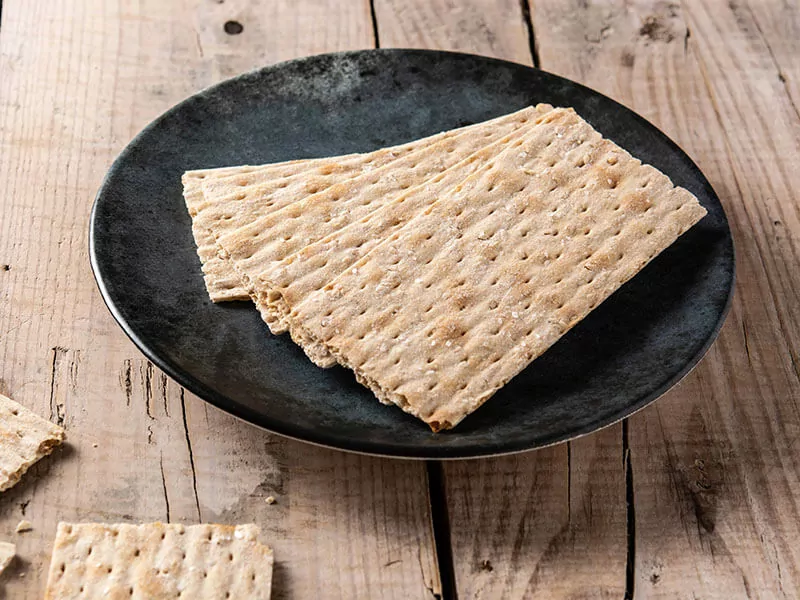
Matzah (or matzo, matza) is an important Jewish flatbread made from unleavened dough and originated from ancient Israel. If you have ever joined a big Jewish holiday called Passover in the spring, you have definitely spotted many Matzah bread there.
Matzah bread might look like crackers, and they are baked goods. They can either be soft or crispy. However, the crispy ones are preferred for commercial purposes as soft Matzah will not last long. The ingredients of Matzah are also varied based on its variation.
The simple version mainly includes flour and water. Some also have eggs. On the other hand, the flour must be made from 1 of 5 specified grains, including spelt, wheat, barley, oat, or rye, based on the Jewish rules.
But those Matzah bread made with onion, poppy seed, rice, buckwheat, or any untraditional Matzah, is not ideal for the Passover holiday. Read More…