12 Books By Irish Authors to Read This Month in Honor of St. Patrick's Day
-
 Loading...
 - Gwen Hebert
- 17 Mar 2022
- 375 Views
- 0 Like
- 0 Comment
This St. Patrick’s Day, celebrate the patron saint of Ireland through the country’s books. You might print out, as my teenage self did, Samuel Beckett’s much-co-opted closing to Worstward Ho—"Ever tried. Ever failed. No matter. Try Again. Fail again. Fail better."—and stick it above your desk as a life and work mantra. You could steal a title from William Butler Yeats. Submit a modest proposal. Read a newish translation of Beowulf. Or you could settle in with a volume from this list (along with a nice cold Guinness or two) and celebrate St. Patrick's Day by spending a few good hours tripping lightly along the ledge of the deep ravine of Irish literature.
Ulysses by James Joyce (1920)
Why not start with this doozy of a narrative? This book really is so fun. It employs “scrotumtightening” as an adjective within the first 800 words! In it, we follow Stephen Dedalus (who you may know from A Portrait of the Artist as A Young Man), Leopold Bloom, and the friends and foes in their orbit, through their travels in Dublin on June 16, 1904. Stephen eats breakfast with “stately, plump Buck Mulligan,” teaches a history class; Leopold eats “with relish the inner organs of beasts and fowls,” and stews over his wife, Molly, and her lover. Along the way Joyce unfurls a journey through centuries of British literary styles, stretched on the framework of Homer’s The Odyssey. Published 100 years ago this February, the book has obviously long been a subject of contention, from its obscenity trials in 1921 to the ongoing debate over how, exactly, one should read and enjoy the book. Bloomsday celebrants will revel in automated maps of Dublin and online annotated texts, while other readers will simply thrill at getting lost in the language—no simple thrill. (I, reluctant romantic, still find it swoony that James Joyce chose the day of his first date with his future wife, Nora Barnacle, on which to set his epic.) “What is the word known to all men?” Stephen Dedalus asks. Read Ulysses, and find out.

A Girl Is A Half-Formed Thing by Eimear McBride (2013)
When most people read Ulysses their thoughts likely don’t immediately turn to how it might influence a novel of their own creation, but for Eimear McBride, reading Joyce’s book in her mid-20s would shortly thereafter prompt the creation of A Girl Is A Half-Formed Thing, which she wrote in six months at age 27 and published some nine years later, winning the Baileys Women’s Prize for Fiction. The unnamed narrator grows up with her cruel and God-fearing mother, attends church, is preyed upon at age thirteen by her uncle, seeks out her own chosen sexual experiences in college. When faced with tragedy: “Storming through the trees. I’d rip their leaves off heads off if I could. I would flee the place and abandon ship. I would tear my eyes out nails out. Just. To stop.”

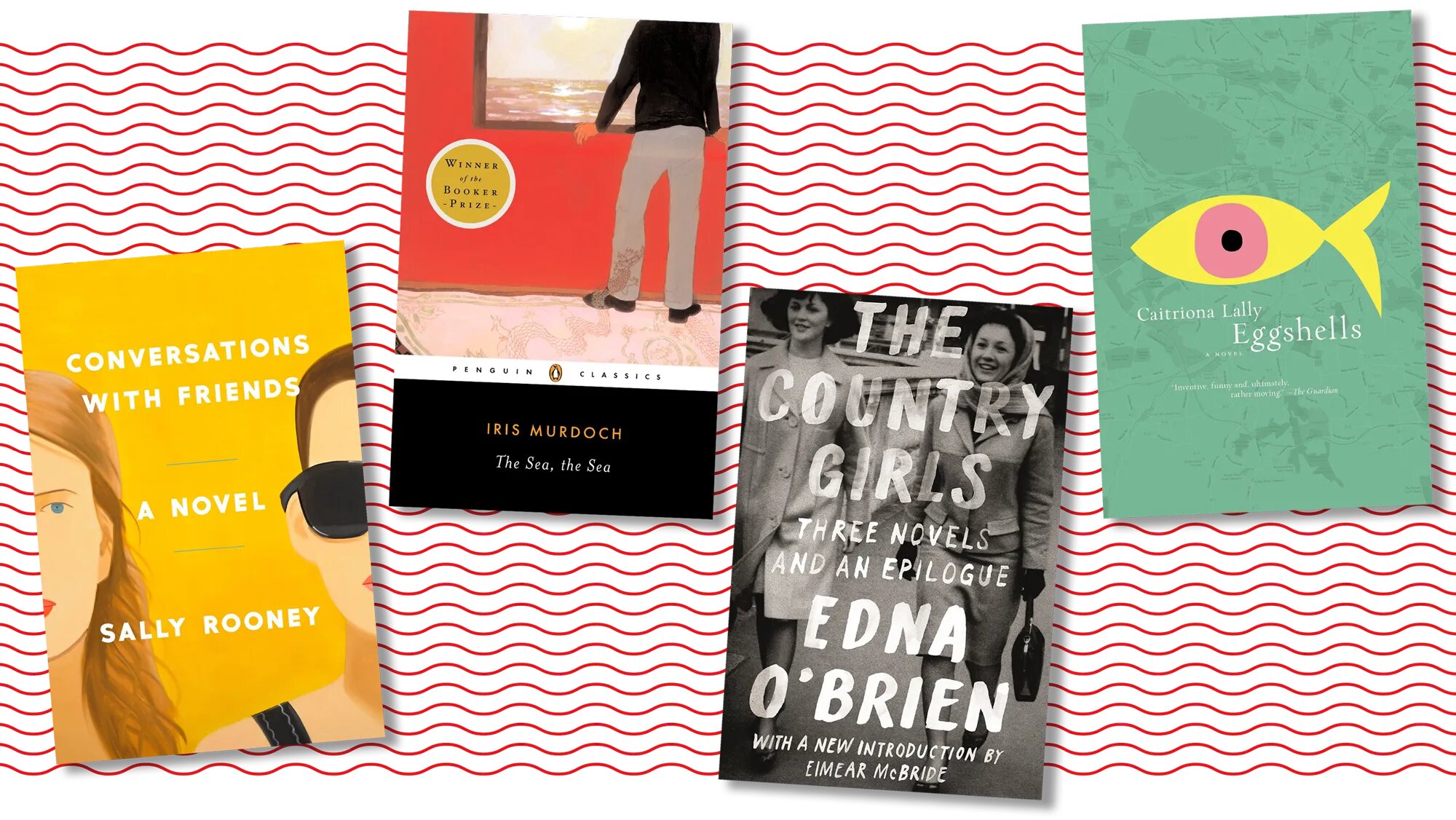
The Sea, The Sea by Iris Murdoch (1978)
“How long does mortal fame endure?” asks Iris Murdoch’s narrator, a pompous former theater director, as he introduces himself and his plan to chronicle his life and thoughts. “My kind of fame not very long, but long enough. Yes, yes, I am Charles Arrowby and, as I write this, I am, shall we say, over sixty years of age. I am wifeless, childless, brotherless, sisterless, I am my well-known self, made glittering and brittle by fame.” The book finds Charles having recently departed the “histrionic arts” in favor of living in semi-hermitude on the North Sea, where he has decided to “learn to be good.” Instead the narrative takes on a sort of ghosts-of-girlfriends-past cadence, with various former lovers and friends dropping by to allow Charles to show off his self-involvement, vanity, and weird dinner menus—though, with the latter’s emphasis on tinned fish, toast, poached eggs, and bottled condiments (one person describes all his meals as picnics) his tastes are sort of chic, now. There are, too, beautiful and roiling descriptions of the ocean, as promised by the title. (It was taken from the turn-of-the-fourth-century philosopher and historian Xenophon’s description of members of the Greek army shouting Θάλαττα! Θάλαττα!—pronounced Thálatta! Thálatta! and meaning “The sea! The sea!,” incidentally one of the only phrases I’ve retained from my collegiate studies of Ancient Greek—when they crested a hill and caught sight of the ocean, and therefore friendly territory, following battle. Our pal James Joyce deployed the same phrase in two notable sections of Ulysses.)
Murdoch, who was born in Dublin in 1919 and died in Oxfordshire, UK, in 1999 is a thoughtful and hilarious writer, and this novel won her the Booker Prize following three previous nominations.The newly minted Murdoch enthusiast can revel in 25 more novels, plus her published letters and diaries, authorized biography, and the controversial memoirs her husband published following her death.

The Trick to Time by Kit de Waal (2018)
Born in Birmingham, England to an Irish mother and Caribbean father, Kit de Waal draws on her heritage in this Women’s Prize for Fiction longlister, set against a tumultuous backdrop of the Irish Republican Army bombings of Birmingham pubs in 1974. (Those looking for further information on the Troubles might turn to Patrick Radden Keefe’s nonfiction saga, Say Nothing.) The novel centers on Mona, and swings between her life as a 20-something Irish immigrant living in Birmingham to her home in a seaside town some forty years later. It’s a story of all kinds of love (between Mona and a cheery young man named William, and Mona and her father) and, accordingly, all kinds of loss, but despite the heft of its material, remains speckled throughout with pithy humor. This one’s not in print on this side of the pond, but you can find it used!