10 Popular Ecuadorian Desserts and Sweets
-
 Loading...
 - Danny Jones
- 02 Feb 2022
- 469 Views
- 0 Like
- 0 Comment
Even as a long-time resident of Ecuador, a sometime restaurant cook, and a foodie in general, researching this article was a real eye-opener. For one thing, I don’t particularly like sweet stuff and don’t go out of my way to taste new types.
For another, most convenience stores here sell pretty much the same stuff as you’ll find in Europe or North America: Nestlé chocolates, ice cream under the several brands owned by Unilever, Oreo cookies. It really is a minor tragedy that fine chocolate isn’t appreciated more here, especially given that Ecuador is one of the major producers of premium cacao beans.
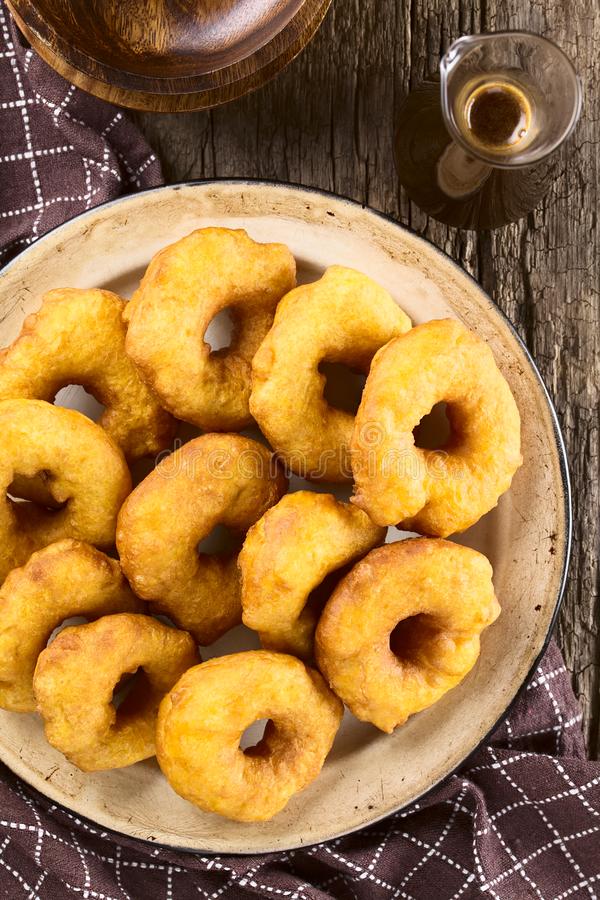
Ecuadorians do like their sweets, but don’t seem to show much preference for traditional desserts. At the three (!) bakeries within walking distance of my home, what you find is mostly Western-style cakes, donuts, and sweet buns.
Scratch the surface, though, and you soon realize that there’s no reason for traditional Ecuadorian desserts and pastries to take a back seat to imported recipes. Let’s discover some of the best traditional Ecuadorian sweets and desserts.

1. Melcocha (Sugarcane Candy)

Melcocha is an incredible handmade candy made with panela. It is known as alfeñique in Spain, and was previously called al-fanid in Moorish Iberia. In Ecuador, it’s mostly associated with the resort town of Baños but can be found all over the country.
Making melcocha by hand is hard work (look at the photo!). The recipe isn’t complicated, but it requires a lot of technique and strength. You start by squeezing out sugar cane (a major Ecuadorian crop) and mixing the juice with the sap of the guacimo tree as a binder.
This is boiled until a syrup is formed, at which point the hard work of kneading and shaping it begins. Of course, you probably don’t have a guacimo tree in your backyard and even finding panela – completely unrefined sugar – may be a chore. If so, just use water and brown sugar. Producing these melcocha is a kind of cottage industry for several families.
2. Huevos Mollos (Creamy Candy Eggs)
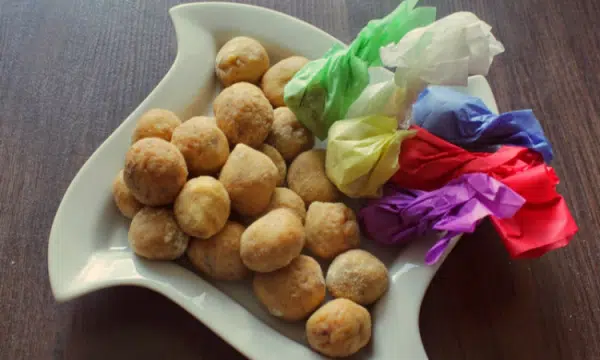
Huevos mollos are sweet little balls of heaven. In Manabi, Ecuadorian families make a living preparing these yummy desserts, alongside troliches; a similar recipe minus the egg.
Huevos mollos are easy to make and can be prepared well ahead of time, making them the perfect party food; milk and sugar are reduced over low heat, after which flour and egg yolks are whisked in to make a kind of sweet béchamel sauce. Once this cools, the mixture becomes firm enough to shape by hand into egg shapes (hence the huevos in the name).
3. Espumillas

Espuma means “foam”, so espumillas are… little foams! What espumillas really are is a glorious mix of meringue, syrup, and tangy fruit pulp. They’re often served in ice cream cones, which makes them a hit at picnics. For the fruit, guava is traditional, but nearly any kind of fruit should work just fine. If you have a very very sweet tooth, grab an espumilla.
4. Alfajores (Caramel Cookies)

If Ecuador has a national cookie, it has to be alfajores. They’re popular throughout Latin America, but we still think of them as ours, originating from the province of Manabí.
The star of the show here is the milk caramel filling (dulce de leche), which is complemented by dried shredded coconut. The biscuit dough is made from cornstarch, which adds a delicate texture.
Making the filling is somewhat of a chore, but as with so much in the kitchen, you get out what you put in. The hard work pays off when you finally have a delicious batch of alfajores to munch through.
5. Natilla (Cornstarch Custard)

Compared to standard custard (or crème anglaise, if you prefer), the Ecuadorian version is definitely on the firm side, so firm that it can actually be cut into blocks for serving. The consistency depends on how much cornstarch you add, and egg yolks are actually optional here.
Another variety, mazmorra de choclo, uses whole maize instead of cornstarch, which is not as weird as it sounds, and tastes great. In Ecuador, custard is served either as is or as an accompaniment to some other dessert that could do with a little lubrication, perhaps fig or guava cake. Read More…